
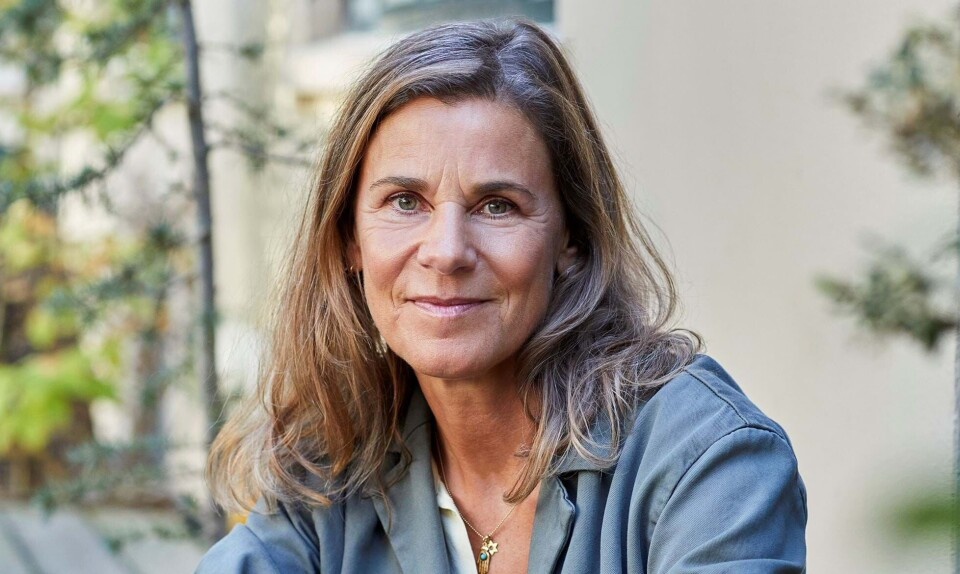
Adapted from her own graphic novel, Sascha Kempinski’s Oscar-qualified animated short Remember My Name recounts her family’s escape during the October 1943 rescue of Danish Jews through the eyes of a child’s teddy bear.
Co-directed with Kirsten Skytte and produced by Rebecca Pruzan, the film transforms an inherited family trauma into a tender, visually striking story of separation and survival.
In this interview with Close-Up Culture, Kempinski reflects on honouring a promise to her father, uncovering her grandmother’s grief, and preserving her mother’s distinctive artwork on screen.
Remember My Name is rooted in your own family history and the rescue of the Danish Jews in October 1943. When did you first discover this story within your family, and what inspired you to turn it into a film?
My family’s story has been part of my DNA for as long as I can remember: perhaps even before I was born. A few years ago, I made a promise to my elderly father that, as his firstborn child, I would pass our family’s story on to future generations so that it would never be forgotten.
Making this film became my way of honouring that promise.
The story is told through the eyes of a little teddy bear, offering a rather unusual perspective on the events of the Holocaust. Where did that idea come from, and what made you feel this was the right way to tell your family’s story?
The story has been part of me since I was a child. When I began thinking about how to pass it on to future generations, telling it from an open and somewhat innocent perspective felt like the only way. A child’s perspective -and, in a way, the perspective of a teddy bear. A teddy bear sees the world without fully understanding the hatred and conflicts surrounding it. I felt this could offer a way into the story that was both emotionally honest and accessible to younger audiences.

The film explores separation, family, courage and compassion during one of history’s darkest periods. How did you approach translating these deeply emotional experiences into an animated narrative while remaining faithful to the historical reality?
It was a long and wonderful process. I first spent time making sure that the world described through the teddy bear’s eyes was historically and factually accurate. Once I had established that foundation, I allowed the emotions to unfold through the teddy bear’s eyes and heart.
Bringing the story to the screen was also a close creative collaboration with my co-director, Kirsten Skytte, whose animation experience and technical creativity were invaluable in translating my vision into film.
When working with family history, there is often a delicate balance between personal memory, historical documentation and creative interpretation. How did you navigate that balance, and were there any discoveries during the filmmaking process that changed your understanding of your family’s past?
I started by establishing the historical facts. A significant part of my family’s story concerns my grandmother, who had to leave her newborn baby behind when she fled to Sweden. That separation created an enormous trauma within our family – both for the child and for my grandmother.
As I worked on portraying the full extent of that pain and grief, I found myself understanding my grandmother more and more. I also began to understand the family dynamics that had developed as a result of what they had experienced. In that sense, making the film also became a journey of discovering and understanding my own family.
Animation allows you to communicate complex emotions through imagery, symbolism and visual storytelling. What artistic choices did you make to establish the film’s visual identity, and how did you work to ensure the animation complemented the gravity of the subject?
Jeanne Goldschmidt, the artist who illustrated my graphic novel on which the film is based, created a very distinctive colour universe that was important for me to preserve.
I like the way the film’s world feels both realistic and slightly displaced through its use of colours and filters. I imagined this might be how a world at war would look through the eyes of a teddy bear.
For the characters, it was important that they were as expressive as possible -that their eyes could speak and convey as much emotion as possible, without the need for words.
Preserving Jeanne Kempinski’s original visual universe was important to me. Working with my co-director, Kirsten Skytte, we sought to translate it into an animated world that feels both realistic and slightly displaced through its use of colours and filters.

With fewer Holocaust survivors able to share their experiences firsthand, there is an increasing responsibility to find new ways of passing these stories on. What do you hope younger audiences will understand or feel after watching Remember My Name?
I hope they will learn about this important part of our shared world history, but more than anything, I hope they will take the story into their hearts. Our film speaks more to the heart than to the head.
Having transformed such a personal chapter of your family’s history into a film that is now reaching international audiences and embarking on an Oscar campaign, has the experience changed your relationship with the story? What does it mean to you to share it with the world?
The story has always been, and will always be, part of my DNA. I share it with the world with enormous pride, humility and gratitude. I am especially grateful to the film’s producer, Rebecca Pruzan, without whom this would never have been possible.
Leave a Reply