
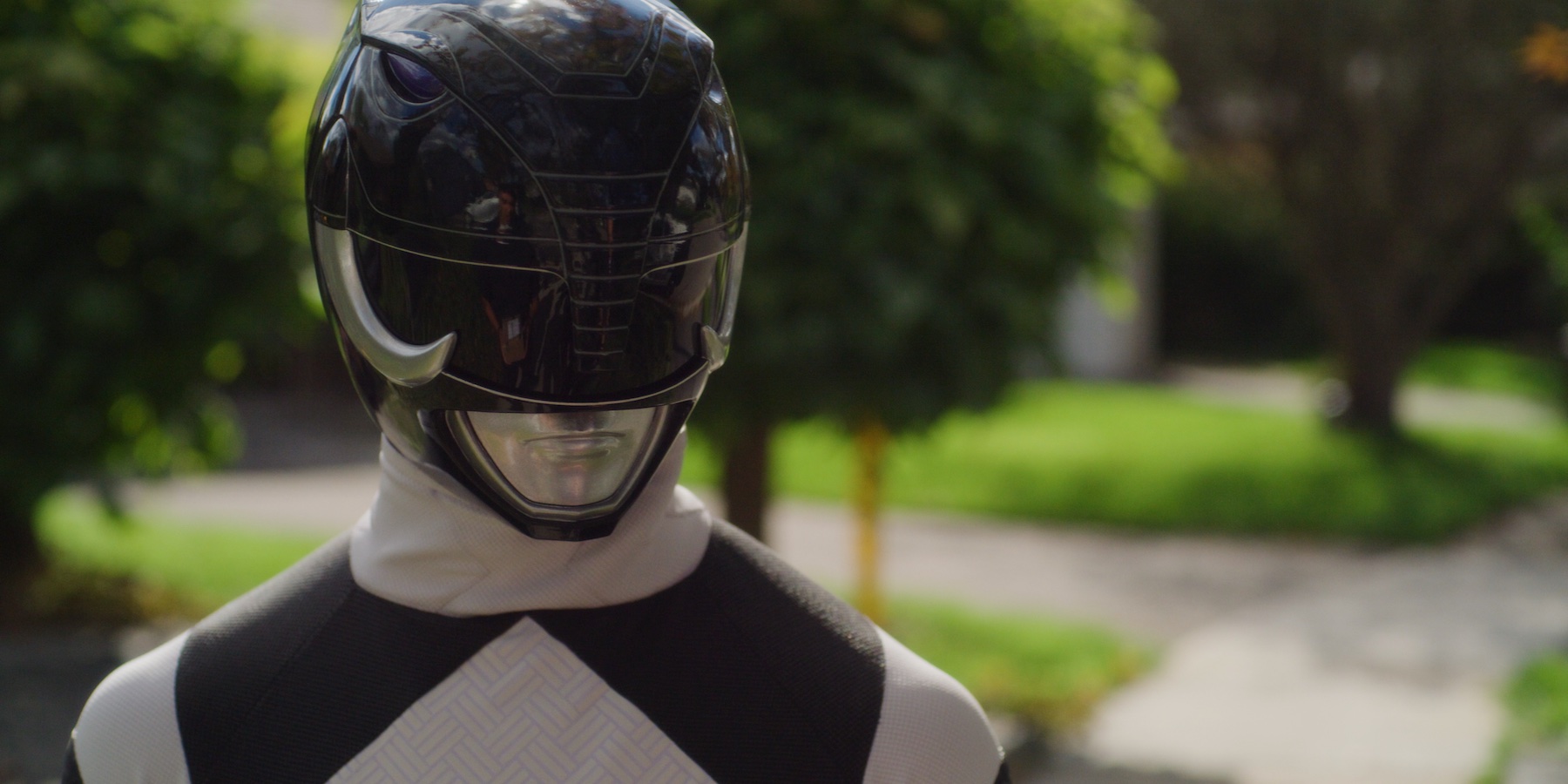
Five years in the making, filmmaker Dennis Nicholson’s independently produced fan film Black Ranger: A Power Rangers Story puts a grounded, character-driven spin on Zack Taylor, the franchise’s original Black Ranger.
Co-written with lead actor Denzel Watson, the non-profit project – which has already surpassed 40,000 views on YouTube – balances elaborate stunt choreography and VFX with a deeper look at Zack’s life beyond the suit as a young Black man navigating everyday challenges.
In this interview with Close-Up Culture, Nicholson reflects on the real-world inspiration behind the film, his five-year indie production journey in Toronto, and why Sam Raimi’s Spider-Man served as his tonal blueprint.
As a lifelong Power Rangers fan, what first inspired you to create Black Ranger: A Power Rangers Story, and why did you feel Zack Taylor was the right character to explore in a standalone film?
I was composing and editing Power Rangers music videos on my YouTube channel, while also building my career as a director, and I often thought about what I would do with the franchise if I were given the opportunity.
While in the writers’ room of my web series ‘Private Idiots’, my friend André Sills was writing an episode dealing with the death of George Floyd in 2020. It was a complicated episode to tackle especially for a comedic series, but André wrote a phenomenal script and I was fortunate to direct him and Oliver Ward in the show (Private Idiots Episode 5: The Twenty Fifth of May). After finishing that story I thought: what if Zack Taylor, the original Black Power Rangers, had to deal with the police as a Black Teenager without his powers? I wrote a short story outline and asked my good friend Denzel Watson what he thought, if he wanted to write it with me, and if he wanted to play Zack. He loved the idea and we teamed up as co-writers and Director/Lead Actor, respectively.
The film takes a more grounded, character-driven approach to the Power Rangers universe. How did you approach reimagining such an iconic franchise while still staying true to the spirit of the original series?
A lot of that really came from the severity of the story we set out to tell. I knew the central themes were intense and the rest of the story, setting, and look of the film needed to match that tone. Portraying Zack as a deeply emotional character dealing with tough circumstances was the priority, but I also knew our story still needed to have fun. For me as director the balancing act of tone is always important, and I think we found that balance in the script writing, as well as discussions in rehearsals and on set. Everybody on the team knew how high we were aiming with the film and everyone brought their A game.

Zack Taylor holds a particularly significant place in Power Rangers history as one of the original Black Rangers. How important was it for you to explore his identity and experiences beyond the suit, particularly through the lens of a young Black man navigating everyday life?
Zack Taylor is historic as the first live-action Black superhero on television, and what Walter Jones did with the character was iconic. It was incredibly important to respect that legacy and I feel like we did that through doing the best job we could telling the story we had dreamed up. Zack ultimately overcomes the personal challenges he faces in the story, aided by the support of his mentor Zordon.
We also wanted to make sure he wasn’t only defined by the personal struggles he faces. In the climax of the film Zack puts his life on the line to save an innocent person in a hostage situation, and he ultimately defeats an overwhelming foe thanks to his quick thinking, falling back on his training, and trusting his teammate to come through when he needs them. Our Zack is also not perfect and we see many sides to his character, but ultimately what we see is a truly heroic character we can all look up to.
You spent five years bringing this independently produced film to life. What were some of the biggest creative and practical challenges along the way, and were there moments when you questioned whether you would be able to complete it?
For a tiny independent production like ours, every scene seemed impossible when we started on this journey, from full-on martial arts stunt sequences, guns and police cars, the super suit and Command Center, etc. but I knew my team and I could figure it all out if we tackled them one step at a time.
We basically treated every scene as its own short film, prepping for months before we shot, which maximized our limited resources (especially stunt rehearsals). Each scene was shot in 2-3 days in a different location, so we could really lock in and make each scene the best it could be. Our cast and crew are all industry pros here in Toronto, Canada, so it was also an easier ask for everyone volunteering on the film to come help out for just a few days at a time.
The biggest challenge was the stunts and fights, I mean it’s Power Rangers, you can’t mess that up. It’s also something I had limited experience with before as Director. Thankfully, my friend Allen Keng is a huge Power Rangers fan and he came onboard as Action Designer. He took the script and developed the amazing fight sequences you see in the film. He and his stunt colleagues also trained our actors, worked on rehearsals and pre-visualising the fight, and supervised the stunts on set. It was an incredible experience as a Director to have a top-level stunt team working on the film, it let me tell the story of each fight exactly how I wanted to. I’m very thankful to everyone who made that possible.
My faith was tested at times, we had some huge challenges, but after we got the first dojo fight filmed and I saw what we had accomplished, I knew the film was going to be incredible once it was finished.
The film combines elaborate stunt choreography and visual effects with the action and fun that made the original franchise so beloved. How did you balance creating something that felt more cinematic and grounded while retaining the excitement and nostalgia fans associate with Power Rangers?
I really took inspiration from the 2002 Spider-Man movie, which really took everything about Spider-Man and treated it with reverence but never forgot how fun the source material was. I think that respect for the source material is the key: never be ashamed of what Power Rangers is, while striving to elevate the material for a modern audience.
An important goal for me was to have the look of the Ranger himself retain the iconography of the original. We stuck with major elements and the overall silhouette while updating materials and detail work to fit a 2026 setting. You look at him and you know who he is no question. We updated some things, like the blade blaster and the Power Morphers, but we always respected the design and intention of the original.
Since its premiere, the film has attracted over 40,000 views on YouTube and generated an enthusiastic response from longtime fans. What has that reaction meant to you, and has the feedback changed the way you view the project or its potential impact?
The response has meant everything to me and the team. People commenting that they felt like they were kids again watching the new film is the best compliment we can get. I set it out to make the Power Ranger film that I would like to see, and it’s really incredible to see that it resonates with so many fans new and old. Even those who disagree with how we handled certain elements are by and large being very respectful and thoughtful in their comments. I appreciate the debate and criticism. That said it’s been an overwhelmingly positive response and that makes the journey even more worthwhile now that we’re finished.

As an independently produced, non-profit fan film, Black Ranger: A Power Rangers Story is ultimately a passion project. What do you hope audiences take away from it, and do you see this as the beginning of further storytelling within the Power Rangers universe?
I hope they, like many who have watched it so far, feel like they did when they watched the show when they were younger (whatever generation of the show that was for them), to really feel the excitement and joy Power Rangers are known for. The story of Zack is overcoming challenges through personal perseverance and the support of his teammates and friends. A hero can’t stand on their own, and relying on those who care about you is a sign of strength, not weakness.
We wrote the film as a complete story that exists inside of a massive universe, and if this is the only story we tell then I am beyond happy with what we accomplished. I do have lots of ideas for the future, but time will tell if I’ll be able to pursue those. I learned so much as a director on this film, and I’m excited to take the experience and use it for my future projects.

Leave a Reply