
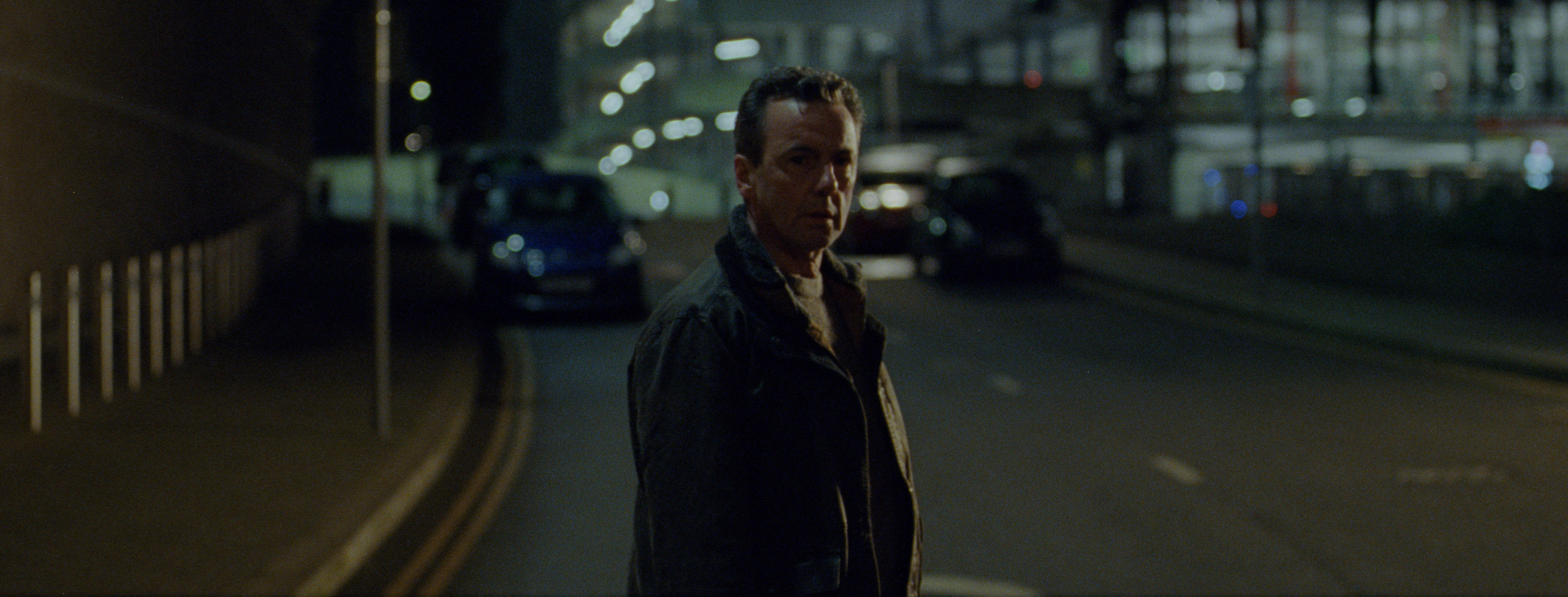
As autonomous vehicles begin to find their way onto our streets, the future of the traditional taxi driver is becoming a pertinent question. But beneath the technological advances and promises of convenience lies a more human story: what happens to the people whose livelihoods are threatened by progress?
In his short film Black Cab, filmmaker James Arden explores these questions through Harry, a man struggling to maintain his place as a husband and father in an industry facing profound change. Rooted in years of research, including conversations with real London cab drivers, the film considers the personal consequences of an automated world, examining the relationship between work, masculinity, and self-worth.
We spoke to James Arden about the inspiration behind the film, the human cost of automation and why Harry’s story speaks to anxieties extending far beyond the taxi industry.
Black Cab is a story about someone trying to preserve their place in a world that is quickly leaving them behind. Do you think there is a wider anxiety about becoming obsolete that extends well beyond the taxi industry?
Absolutely. Writing and developing this film alongside the explosion of AI, I realised it was a form of catharsis for me – especially as a filmmaker at the dawn of fully AI-generated video and dealing with that. All of us attach so much of our self-worth to our jobs and vocations, and we all want to preserve our own place in the world. I’m glad the film tapped into that anxiety – we need to start having conversations. For what it’s worth, as a filmmaker I’m not worried about AI now. There are no shortcuts to becoming a good storyteller and reflecting the times we live in.
You spent over two years researching the script and speaking to real cab drivers. Were there any conversations or personal stories that particularly changed your understanding of the pressures facing the industry?
Every cabbie I met and chatted to in the cabmen’s shelters informed the story in some way – it was actually really difficult to distill all those stories and insights into a fifteen page script that packed a punch! I will say… one cabbie told me that they no longer allow gambling in the cabmen’s shelter (the little green huts around London only cabbies are allowed in), but people still do it sometimes down at the airport ranks… and people have lost cabs in big hands and had to walk home. That stuck with me! I’m not sure that answered your initial question, but it was one of the really interesting insights I got to an industry full of characters! Characters we’ll lose if there’s no drivers… There’s an unwritten rule that cabbies give pregnant women a free ride to the hospital. I’d like to see a Waymo exercise that sort of selflessness and humanity.
There’s often a lot of excitement surrounding technological innovation, but less attention paid to the people whose livelihoods might be affected. Did you see the film as an opportunity to give a voice to a group who are often overlooked in discussions about the future of work?
In a way, yes. The film is emotionally-heighted fiction, at the end of the day, and in no way supposed to be a definitive exploration of what the future holds. Harry (Jay Simpson) is portrayed as naive and stubborn – optimistic to his own detriment. I wanted the film’s outcome to reflect that sort of attitude – that just because you just keep saying “it’ll be alright” doesn’t mean it will be. How many lay-offs have we seen across multiple sectors in recent years due to technological innovation? It’s not a small problem.

Harry is someone whose identity is closely tied to being a husband, father and provider. Why were you interested in exploring the relationship between masculinity and professional identity?
This is absolutely true of women too, but men have a particular problem with equating financial and professional success with their own worth – to themselves, a partner or society as a whole.
I wanted the protagonist – Harry – to embody an outdated version of masculinity, in a way; a quintessential cabbie who isn’t necessarily emotionally equipped for the world around the corner. Not to say all cabbies are like that!
Given the real-world research behind the script, how did you strike a balance between the broader social commentary and keeping the story grounded in a character’s individual experience?
I wanted the film to be a family drama first and foremost, and a thriller with sci-fi on the fringes second. With that in mind, I wanted to focus on the emotional impact on Harry and how that rises throughout the film, and obviously provide the context of the autonomous cars but not focus on them too much – partly for budgetary reasons, and partly because I think that’s how bigger societal changes unfold on a personal level. He sees it on TV, he hears it on the radio, but his frustration isn’t really heard far and wide – just by himself and his loved ones.
Did speaking to real cab drivers influence how you approached Harry as a character? Were there particular attitudes, experiences or anxieties that you wanted to ensure were represented authentically?
I remember chatting to a group of drivers in the Kensington cabmen’s shelter and they really laid out all the issues they’ve had to face in recent years – speed cameras everywhere, the change to 20mph, an explosion in dangerous cyclists and Lime bikes, the monopoly and cost of the new electric cabs, the (once planned and now a reality) pedestrianisation of Oxford Street, Uber coming in, and now Waymos. That’s not to say some of these developments aren’t ultimately for the greater good, but you can’t blame cabbies for feeling anxious and stressed – it’s as if everything is trying to drive them off the roads. I wanted Harry to feel some of that pressure.

The taxi industry is a very specific setting, but the anxieties at the heart of the film are much more universal. How conscious were you of making Harry’s predicament relatable to people working in entirely different industries?
I was very conscious of it having a wider appeal – I hope the film makes people think about their own work and self worth, and so far that has been the case with audiences at screenings.
After watching Black Cab I spent a lot of time thinking about how my professional identity is intertwined with my personal identity (and what losing my job would do to that). Do you think we’re approaching a point where we need to fundamentally reconsider how we define work, our purpose and our personal worth?
Definitely. These aren’t new conversations – some sociologists and economists have been championing things like UBI (Universal Basic Income) for years, but I think as technology escalates and impacts us more and more, we need to start reconsidering how we structure society and our place within it. I’m not suggesting we can live in a utopia, but I think it’s fair to say… the system isn’t working for everyone, is it? It can’t all be about “convenience” and “optimisation” – we need to have that collective chat.




Leave a Reply