
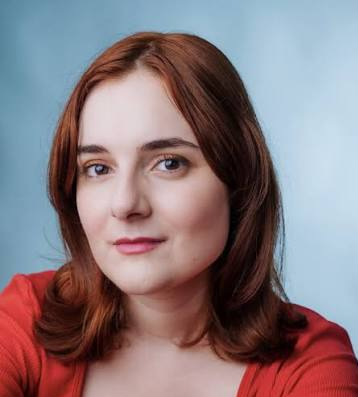
Originally conceived as a period piece about Nikola Tesla, the short film Decode Me evolved into something far closer to home for its Maltese writer-director, Sharon Sibyl Gatt.
Drawing from her own experience as a late-diagnosed autistic woman, the film follows a programmer named Jane as she tries to debug both her code and herself.
In this interview with Close-Up Culture, Gatt opens up about the invisible toll of masking, creating a burnout-free film set, and what it would mean to bring Malta to the Oscar shortlist.
What first inspired you to make DECODE ME, and why did you feel it was important to tell a story about late-diagnosed autism in women?
We rarely see stories of autistic women, written by autistic women. However, Decode Me originally started off as a story about Nikola Tesla. It was, and still is, a film that explores the idea that, if you are autistic, you’re only allowed to be your “eccentric” self if you have something worthy to give to society; such as with Nikola Tesla and his engineering. In our story, we explore a snippet of Jane’s life, and her programming.
Myself and my co-producer, Yorgo Glynatsis, decided to pivot from the original Tesla story and to adapt it to modern times, and as I felt that there were many stories of autistic men out there. Being an autistic woman myself, Yorgo also suggested that I would be able to tell a story closer to my heart if it was more modern.
The film explores the exhaustion of masking and the pressure to meet other people’s expectations. What did you particularly want audiences to understand about these experiences?
I want people to understand just how exhausting it is to mask and hide every single day. It’s not only about pretending to fit in, but it’s about trying to take in an incredible amount of overstimulating information. It’s about the exhaustion of constantly having to observe, and learning to fit in, avoiding of stimming, living in an overstimulating environment. All these things lead to burnout. I also wanted to make it clear to the people who say to me “You don’t look autistic” that there’s a reason for that: masking. And I also wanted to overcome the usual stereotypes you see in the media.
Jane is a programmer who spends much of her time trying to find solutions. What interested you about exploring self-acceptance through someone whose instinct is to solve problems?
So having a neurodivergent brain, it automatically goes into problem solving mode, because that’s what feels the most helpful. I wanted to keep that as an important essence of the film. I wanted to make it clear as well that sometimes that is a strong point, but sometimes it’s also a weakness. I really wanted to explore the idea that we put a lot of pressure on ourselves, no matter whether you’re autistic or not. We are bombarded online by people saying that we have to be better at everything. Sometimes we just want to just exist.
How did you approach writing the relationship between Jane and Elizabeth, and what did you want their conversations to reveal about understanding and acceptance?
I wanted them to really bounce off each other. In my mind Jane was the autistic side of the brain, while Elizabeth experienced ADHD, making the character actually AuDHD. Both can exist in one person. Two sides of the same coin.
There’s also this concept I was thinking about a lot while making the film: Talk to the Duck. It’s a problem solving method that programmers swear by. It means that if you’re ever stuck debugging a code, and can’t figure out something complicated, speak the process out loud to an inanimate object, such as a rubber duck, and it will help you untangle the web.
So Elizabeth started from there. Having someone else to speak to, someone to bounce ideas off of. Sometimes just saying the things out loud that have been circling in your brain all day, makes thing better.
Unknowingly, Jane is not only trying to debug her code, but also trying to “debug” herself. And Elizabeth is the reminder that the simplest solution is most often the best.
You’ve spoken about wanting to challenge portrayals of autism that are often limited or based on familiar stereotypes. What do you think cinema still needs to do better when representing neurodivergent women?
Definitely listen to and hire neurodivergent women. I’m glad to see more representation nowadays, but I do want it to continue improving. Especially where it’s not the usual stereotypes of the “Sherlock” character or the “Manic Pixie Dream Girl”. We should be allowed to just exist within the media, with our characteristics. A lot of the time, neurodivergent women aren’t listened to, and I want to help change that.

Was there anything about making the film that changed or deepened your own understanding of the experiences you’re exploring?
It’s funny, I wrote the film, but I still fall into the same habits of Jane of constantly forcing myself into a box, and focussing so much on work that I forget to rest. I have to remind myself of what I wrote and directed in the film. That I can ask for adjustments. That I’m allowed days off. That I shouldn’t be feeling down when I feel like a fish out of water. And most importantly, working on a film set full of neurodivergent people, it made me see that we don’t have to continue working on sets where everyone gets burnt out. To me, Decode Me was also a way for me to try and make it as accessible as possible, so that for my next project, if objections were to be raised, I could use it as an example of where accessibility was possible.
As a Maltese filmmaker, what would it mean to you if DECODE ME became the first Maltese-led short film to reach the Oscar shortlist?
I mean, it would be incredible. Being Maltese I always felt like I was a nobody from a tiny island in the middle of the Mediterranean sea. A nobody. I also feel a sense of pride as a woman doing this, and that I brought Maltese people on board in head of department roles. Even if we don’t get shortlisted, to me, it’s still an honour to be here today with the film. But yes, I can’t lie, it would absolutely mean a lot.
Ultimately, what do you hope someone who recognises themselves in Jane’s story takes away from watching the film?
If one person sees this and feels less alone, then I’ve done my job as a filmmaker. That was my aim with making this film. Growing up, the only thing that gave me comfort is seeing films and tv-shows, and sometimes spotting characters that I felt represented how I felt. They allowed me to accept myself more, even when I didn’t know I was autistic or even if the characters weren’t specifically written that way. I want people to feel seen, and understood.


Leave a Reply