
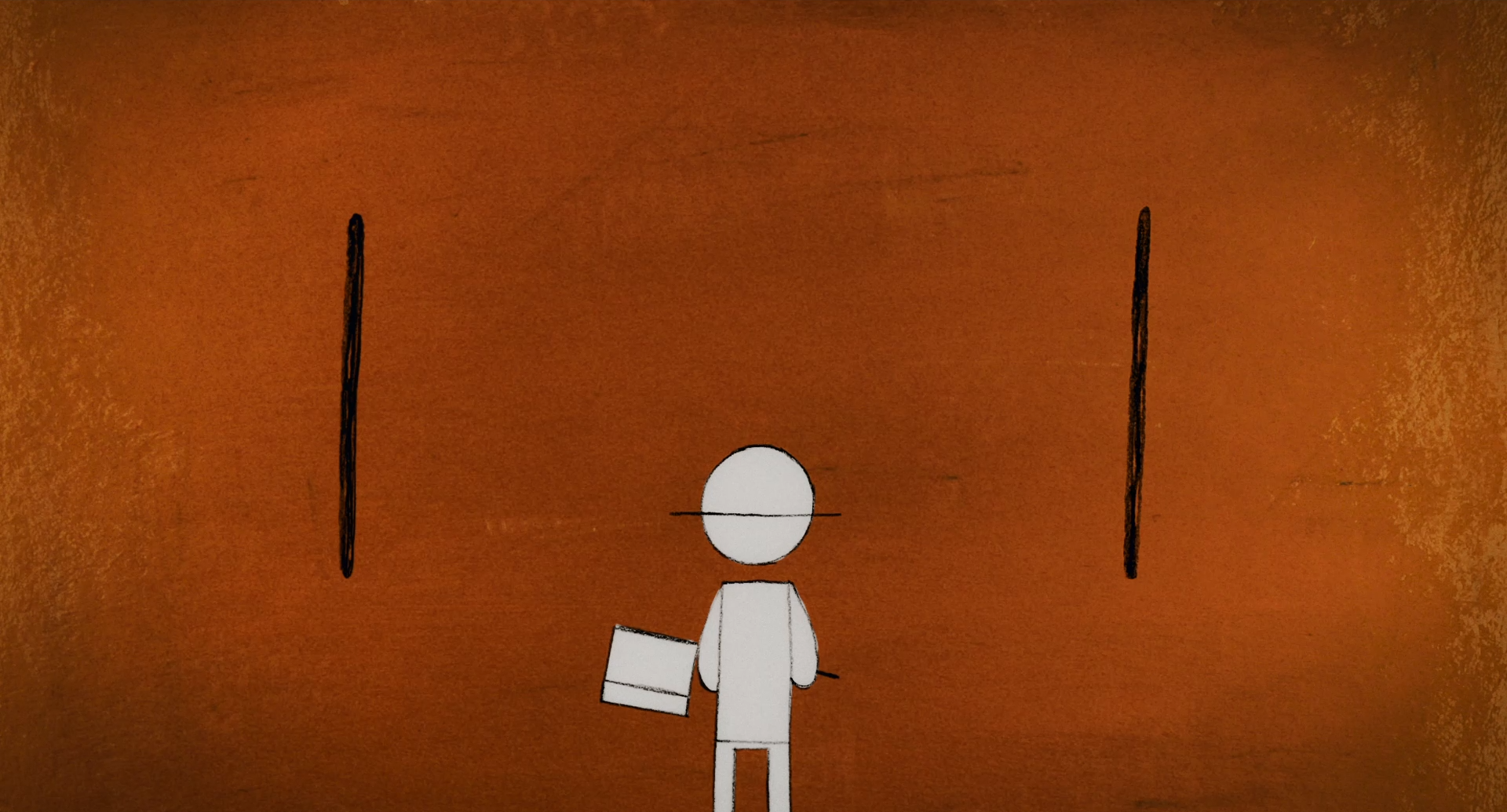
Animation artist and director Ross Stringer stops by on Close-Up Culture to chat about his BAFTA nominated short film, Crab Day. The short film follows a young boy who – as part of a fishing community’s annual ritual – must kill his first crab in order to become a man and gain his father’s approval.
Firstly, huge congratulations on being nominated for a 2024 BAFTA, what was it like finding out you had made it onto the list of nominees?
It’s a very abstract concept to grasp, but firstly there were lots of grateful feelings towards the people on my team. It definitely brings a lot of attention, and I’m not super used to being in the spotlight as an animator, so that was an adjustment. It’s funny how you can draw some simple characters on paper for a year and get recognised for it. Also, I realised I had to buy a suit for the awards which turns out to be quite tricky…
How did the idea of the film develop? And what was the brainstorming process for the plot, and the name?
My writer and I were paired up during our first film project at the National Film and Television School. We were meant to come up with story ideas based on paintings that we viewed at the Tate Gallery. We were still working remotely at the time due to the pandemic, so instead we were browsing the online gallery. We’d found we both had an interest in seaside themed imagery, amongst other things. Particularly, Alfred Wallis’ work and a monster crab painting by Oskar Kokoschka come to mind.
From there we discussed themes surrounding masculinity, queerness, old fishermen, etc. To us, the crab became this symbol of the hard shelled man with the soft inside, which sort of ended up being inspiration for the dad’s character traits and wide-set appearance. The idea of the crab killing ritual came from a memory of mine – killed a fish for the first time, when fishing with my dad. It was presented to me like a right of passage into manhood. The name Crab Day was just a way of telling the audience that today is a special day, and it has to do with crabs, which helps communicate the idea of ritual and tradition.

There’s no dialogue throughout, was it difficult to navigate telling a story like this with no words?
It was mostly difficult in the development stage, as the still images can only communicate so much. I’d understand what they meant or how they would move, but for others it was more difficult. It meant that it was easy to second guess myself during feedback session. But really, once things were animated it would solve most of the problems – so when you’re stuck just animate! It felt natural for us to work without dialogue, especially since the story was about masculine stereotypes and it helped get across the idea that no-one would really talk
about anything or their feelings. It was important for the emotions to come through the characters actions and not their words because often men don’t have the vocabulary to do so. Also, our sound designer Simon created the ‘blinking language’, which conveyed a lot of the communication between characters. Our composer Matteo was brilliant at scoring the boy’s internal moments – that bit at the end before he chops the rope, you know exactly what he’s thinking.
What led to the decision to use animation over live action?
It’s all about the naive perspective of a child, I spent some time looking at my old drawings from when I was little one and they’re drawn without any sense of self consciousness and are just a raw expression of feeling. They were arguably better than my drawing skills today. I wanted to channel this so that the audience could resonate with the boy’s story and their own sense of childhood. Also, the characters are so simple in design that anyone can project onto them. And finally, the whole crab growing giant metaphor might’ve been tricky to convey in live action!
How did you develop your animation style? Are there any current animators you are inspired by?
I actually looked at a lot of painters for this film, Alfred Wallis, Paul Klee, Joaquín Torres- García, Joan Miró, and many more. I’m inspired by endless animators for very different reasons, but for the style of this film I’d have to mention Boy and the World by Alê Abreu, and especially Andreas Hykade’s We Lived in Grass.
Do you have any other projects or ideas lined up?
Might be developing something based off of the world of Crab Day, but you’ll have to wait and see. Other than that, I also love animating independently. I found an unexpected interest in performance animation last year, creating visuals for music, so even that is an avenue I want to explore. Always open to ideas, or collaboration, tell the world!
What was it like working with one another on this project?
It was a pleasure really, everyone brings something that you could never do. I’d never be able to make something like this all on my own, especially in the time it took. Tricky for me to go from introverted animator to director, but you quickly learn that everyone is mostly there to help you along in the process and vice versa. All you have to do is trust your voice, which admittedly is easier said than done.
Where can people follow your work?
I’ve got an instagram that’s mostly for sharing fun projects and animation experiments, @_living_lines. Otherwise there’s also a website that I often forget to update, rossstringer.art. Feel free to reach out, even if just for coffee and a
chat.



Leave a Reply