

This review contains spoilers for Dependence.
Faced with her father’s death, a filmmaker returns to her personal archive to piece together an unflinching account of his struggle with addiction, and the impact it had on them both.
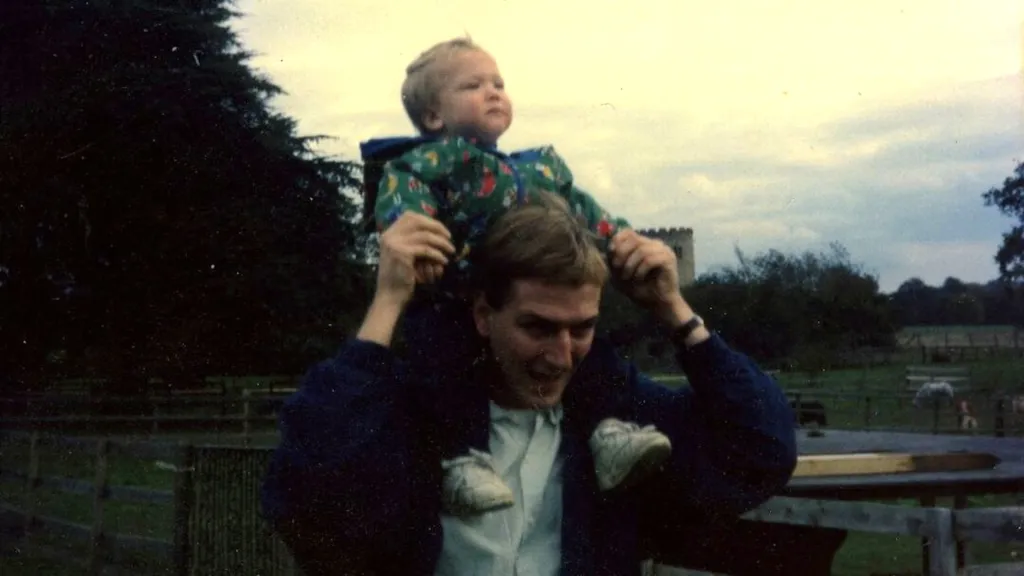
Setting the scene in London 1995, we learn that director Grace Harper Brighouse has been filming her family for as long as she can remember. Parties, dinners, every day life, we start with a roll call of young Grace introducing her family members one by one as she films them using a handheld video camera. Ending this section of the brilliant archive is Grace’s dad Richard in shot, setting up the rest of the film, not wanting to be recorded. He wants to be mysterious, thinking future generations won’t know him, “I wonder what he was like, they can say.”
Young Grace couldn’t have predicted that the footage she shot 30 years ago would perfectly anchor the beginning of her film today, but it’s a gem among a treasure trove of captured clips that illustrate this family’s life to perfection. From birth to present day, we see the growing of a family tree that narrates their own lives, and they all seem to have the most profound things to say at all times. This film wasn’t planned to be put together until after so many of these moments had been recorded, but I’m sure Grace pinched herself every time she discovered something else foreshadowing her future.
I love documentaries that are deeply personal, but Dependence seems to go even further, allowing us to see Richard directly through Grace’s eyes, only ever seeing her behind the camera through reflections and if footage she hasn’t recorded is included. She unlocks moments in time, the strands of the film that run parallel with each other as we discover truths, twists and deaths, dealing with the aftermath as the family come together each time and somehow manage to hold their heads high.
It’s invasive, vulnerable, we’re not a fly on the wall, we’re there in the action asking the questions and hoping for the best at every hurdle. For 94 minutes, this entire family attempts to wear their heart on their sleeve, battling with protecting each other from dark unknowns and the pain they can cause. We don’t see Grace and her dad argue until near the end of the film, something that she alludes to happening a lot over the years with other characters. Even with the twists and turns known, she wants to present her dad as a good person to the audience, someone who deserves kindness. Rippling throughout is an interview with her godfather, one of Richard’s closest friends. She asks him if he blames the drugs for her father’s addiction and death, but in response it’s her who answers after a brief back and forth, saying, “it would be lovely to blame something that isn’t him.”
We see Richard go from loving husband to doting father to opioid addict, even to lost soul, drifting in appearance and health from the initial person his family knew. Grace obviously cares so much about him and her family, it’s clear with how delicate she’s been with every piece of filming to bring those memories and feelings to screen, including life after her father’s death.
Blurring timelines by the end, the director jumps to her own future with a new child in the family. She’s innocent, playful, the same as Grace was in the initial tape we saw on screen. But this time in parenthood, she knows exactly how she might want to have her child grow up. Bringing hope for the future, away from the tropes of nature or nurture that cast their shadows over her.






Leave a Reply