
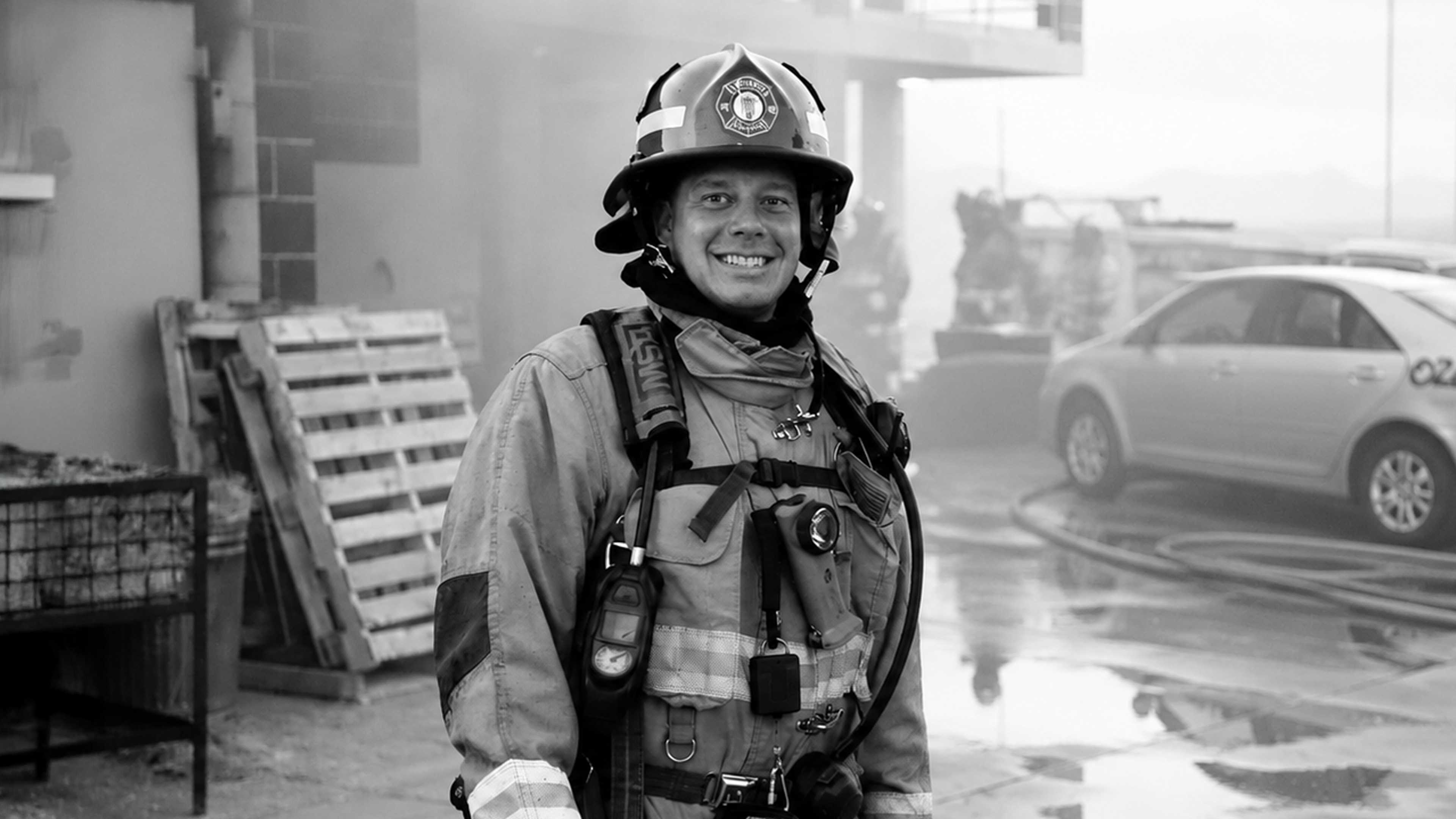
For over two decades, director Patrick Gramm has trusted his instincts, but nothing could completely prepare him for chronicling the final months of Fire Captain Scott Leatham’s battle with occupational cancer.
In this intimate conversation, the Emmy winner breaks down the meticulous editorial choices behind Last Alarm – interweaving deeply vulnerable family moments with studio footage – and how a project fuelled by a dying man’s final wish left him crying at his own timeline.
You filmed Scott Leatham and his family during the final months of his life. What led you to document his story, and what made you feel it was important to share?
I had just finished post-production on a firefighter cancer film called Dying To Save You – it hadn’t even screened yet – when one of the oncologists featured in the film reached out to me about another young firefighter battling a horrible, rare cancer. She introduced me to his fire chief via a group text, and he asked if I could interview Scott.
Next thing you know, my wife and I were sitting on the Leathams’ couch, getting up to speed on what was happening and arranging a date to film an interview. But at some point during that very emotional first meeting, I just felt we were supposed to follow this story to whatever the outcome would be. So, we did.
Patrick, you’ve described Last Alarm as a cinematic, documentary-driven music video. How did you balance the real-life footage with the visual storytelling of the song?
Very carefully. Viewer abandonment was a real concern for me while I was editing Last Alarm. I had footage that could emotionally demolish a traditional music video audience, and I thought long and hard about what to show and what to leave out.
The challenge was finding that balance. I wanted people to understand what Scott and his family went through, but I also needed them to stay with the film until the very end. If the audience gets so overwhelmed that they stop watching, the story doesn’t get the opportunity to do what Scott hoped it would do.
So, the footage of the song being created allowed viewers a brief mental break from the otherwise intense footage of what was happening to Scott and his family.

Scott hoped that sharing his story might make a difference in someone’s life. What do you both hope viewers take away from Last Alarm?
I believe a lot more people would be willing to help firefighters if they simply understood what is happening to them. That’s what I hope Last Alarm accomplishes.
Scott told me he hoped his story would help someone. If this film reaches a firefighter who decides to take cancer prevention more seriously, or if it encourages them to go to the doctor sooner when they are not feeling right… then we’ve done something truly meaningful.
After working on a story this personal, how do you find the right moment to step back and let the footage speak for itself?
It’s really just instinct. After 21 years of filmmaking, you develop a feel for when something needs your editorial touch… and when it’s best to leave the moment alone and let it play out.
What was one moment during the making of Last Alarm that surprised you, or that you’ll carry with you long after the video’s release?
Honestly, it was the day the project was finally finished. The mastered song was in the timeline, the music video was complete, and I just sat back and allowed myself to experience it for the first time as a regular viewer, not as an editor.
And I just fucking cried.
I mean, Last Alarm started as this wild, seemingly unachievable idea in my head back in late January, and I couldn’t let it go. Nine months later, there it was. Completed. We fucking did it.
Title image photo credit: The Leatham Family





Leave a Reply