
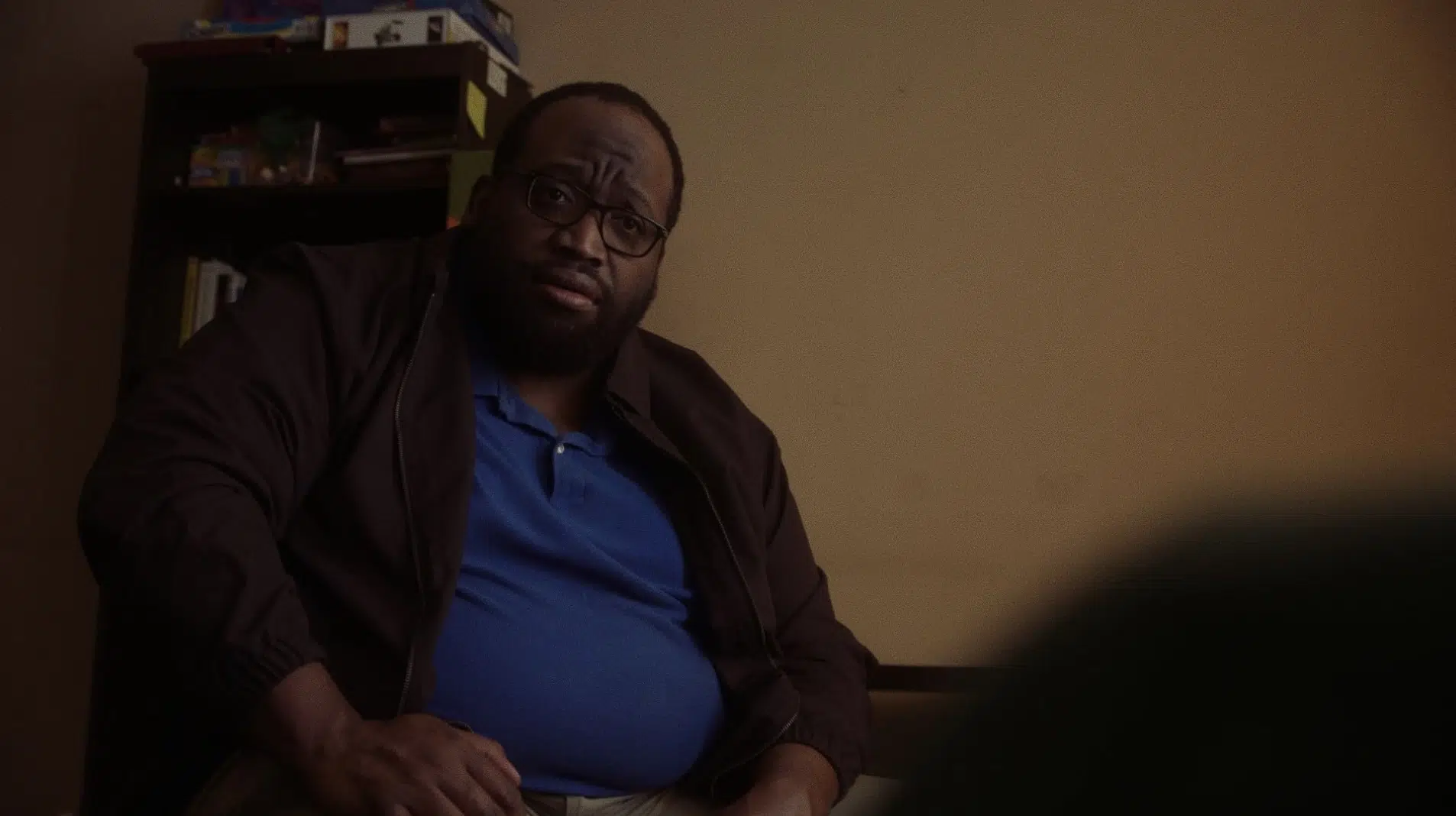
When filmmaker Marcellus Cox set out to make Liquor Bank, he knew he had to tell the story of Eddie, a Marine veteran who relapses on the eve of a major sobriety milestone.
Now recognised as an Academy Award contender by The Hollywood Reporter and heading to Los Angeles for TheWrap’s Short Film Showcase on November 11th, Cox sits down to discuss the heavy responsibility of filming a truth that millions live every day.
Liquor Bank follows a man who relapses just one day before reaching a year of sobriety. What drew you to this story, and what made you want to tell it as a short film?
Well, it was back in 2023 when Brian Sherwood drew my attention to Eddie’s story. Brian was an executive at PBS, and now he’s over at A24. He told me about Eddie, and it moved me – especially since he was in the Marines, and you never hear how Black soldiers coming home from war have to deal with transitioning back into normal society. I got to meet Eddie, and we hit it off. The more I heard his story, the more I knew there was no way I couldn’t tell it. I felt that other Black men, and young men of colour in general, had to know his struggles, but at the same time, they needed to witness his triumph in getting his life back on track. So for me, it became a matter of life or death to see this vision through to the very end.
The film is based on a true story. How did you approach adapting real events while still shaping a compelling piece of cinema?
My number one approach was getting the facts straight down the middle from both Eddie and Baker themselves. Once I had that, I had to take into account the people who would potentially be watching this as the target audience: veterans and recovering addicts. So, I went to the Memorial West location in San Diego and spent time with veterans, hearing their stories about their time at war. They shared their encounters going through the kind of hell they had to fight through for our freedom, and what it was like coming home.
It was incredible. Then, I spent about a month and a half at a few AA meeting groups out in San Pedro, dealing with folks trying to get clean and hearing about their fight to stay alive while dancing with their demons. There were some stories that made me sad and uncomfortable for sure, but it was necessary to know the truth in order to tell the truth. Once I had all of that information, I was able to craft my story, telling the whole thing like it is while keeping the human element intact. I wasn’t trying to make fun of people in those situations, but rather show what they go through and reveal that it’s not a game or a joke.

The story touches on addiction and recovery without making the journey seem straightforward. What did you most want audiences to understand about relapse?
The biggest thing I wanted the audience to understand is that it happens. These folks in recovery didn’t just get to this point for no reason. They are human, just like you and me. We all have faults, and it’s not an easy thing for some to acknowledge and accept – especially when it involves a loved one – but you have to be patient with them. You have to show them that even when they are at their lowest, they are loved and we are here to help. There’s no way you can ever tell a story like this in a straightforward way. I personally believe if anyone tries to, they’re lying about it, because recovery of any kind isn’t straightforward.
As a director, how did you work with Antwone Barnes and Sean Alexander James to bring the characters and their experiences to life?
Working with Antwone and Sean was an absolute joy and pleasure. They’re both brilliant actors; I didn’t have to give them much guidance at all, haha. I just shared the story and my vision with them, but allowed them the space to create the characters in their own image. Working with talent is a collaboration, and that’s how I love to work with actors. It’s our film, and I want to give them as much leeway as possible to let them shape the performance. With them, it worked to perfection. They embodied the roles of these men and did their story justice. I can never thank Antwone and Sean enough for what they brought to the screen.
The film has received some significant recognition, including being named a contender in The Hollywood Reporter’s Oscar predictions. Has that attention changed how you feel about the film or its journey?
I’m excited about all of the attention, without question, haha! But I still feel the same way about the film that I’ve always felt. It’s about the true struggle of recovery, dealing with PTSD in veterans, and showcasing to the world how these issues can’t be ignored or overlooked. At the same time, it’s about showing true brotherly love and the willingness to find life and light at the end of the tunnel for anyone in these situations. As long as that remains at the forefront of things, I can allow myself to be a little bit excited, because the film is attracting the right attention for the right reasons.
Your film is heading to TheWrap’s Short Film Showcase in Los Angeles. What are you most looking forward to about sharing it with audiences there?
I think it’s the same thing I look forward to for any audience we’ve shown it to: the message. I hope that the audience will appreciate the character study and the attention to detail in these stories, and use it as motivation to help the next man or woman in situations like this rather than taking them for granted. I want it to be a great screening and get an amazing reaction like any filmmaker would want for their film – I want it to tear the roof off the building, haha! But at the same time, nothing comes before the message of this story, and I want that to get the proper attention it most certainly deserves.

Is there a particular response to Liquor Bank that has stayed with you—something that made you feel the film connected with someone in the way you hoped?
There was one back in 2025 at a screening for the Reel Black Men Showcase at the Writers Guild of America in Beverly Hills. There was a veteran from the Iraq War who saw the film and was so moved by it. After the screening – mind you, I had never met this man in my life – he walked right through a crowd of people, came up to me, gave me a hug, and said, “Thank you for telling my truth.” He had been going through the exact same situation as Eddie, and the fact that he felt it was his story as well was incredible to me. It’s a moment that will stick with me for as long as I live. As artists, we tell stories for all kinds of reasons, but for me, it’s for moments exactly like that.
What’s next for you as a filmmaker? Are there other stories or subjects you’re especially keen to explore?
I’m working on a feature film. It’s time; I feel like I’ve worn out my welcome with short films, haha! I need a bigger canvas to be able to tell and showcase the visions that are running wild and free in the back of my mind. The kind of stories and subjects I want to speak on could be anything – it just has to hold my attention, but also have something artistic and creative to say.
The film I wish to make next is called Jefferson Street. It’s a period crime drama set in 1966 East Texas, following an African American detective who travels down south to Texas to investigate the murder of his mother at the hands of the Ku Klux Klan… So, hopefully, if everything goes according to plan, it will be on the big screen real soon.






Leave a Reply