
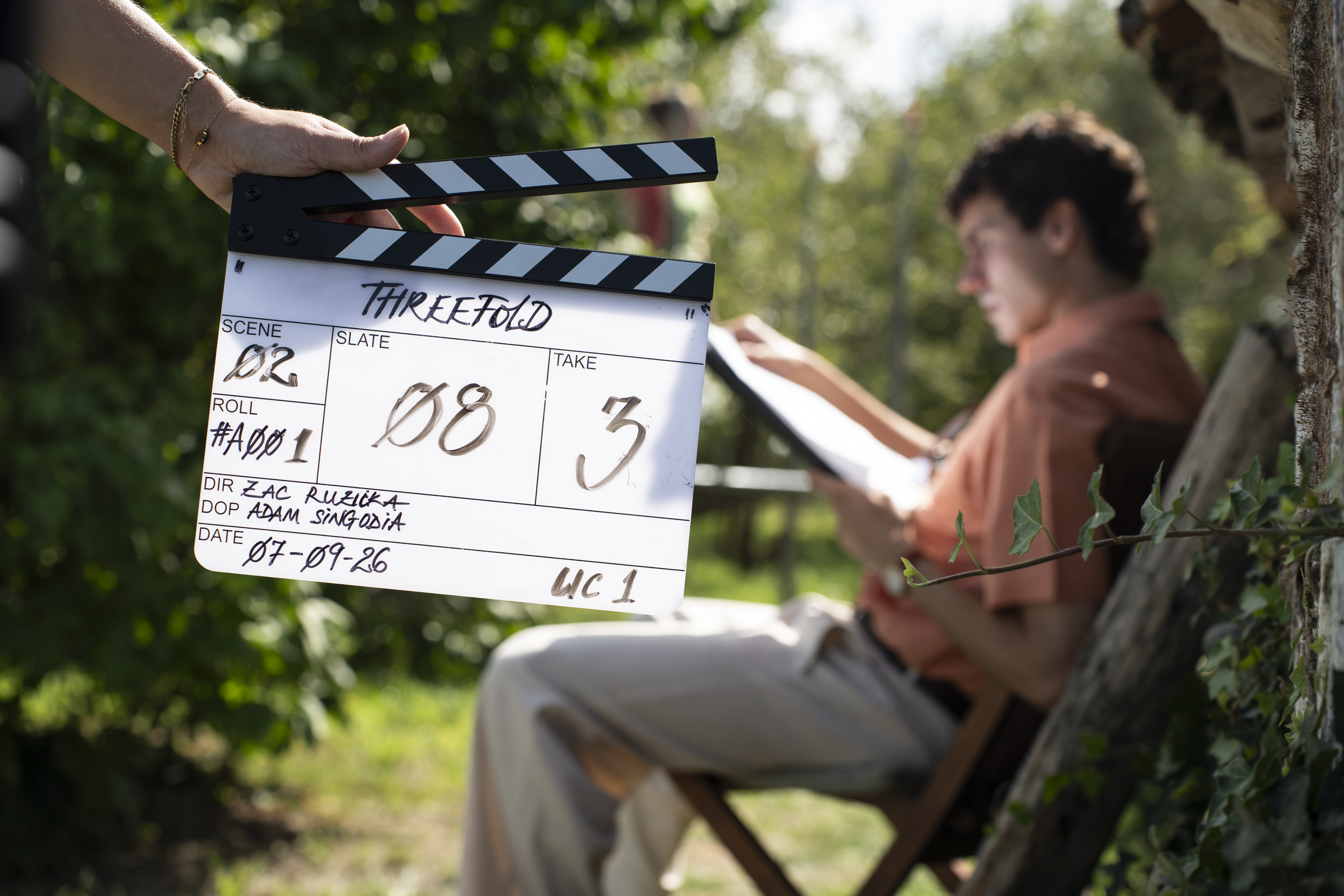
The creative team behind Threefold take us behind the scenes of their upcoming psychological drama shot entirely on location in rural France.
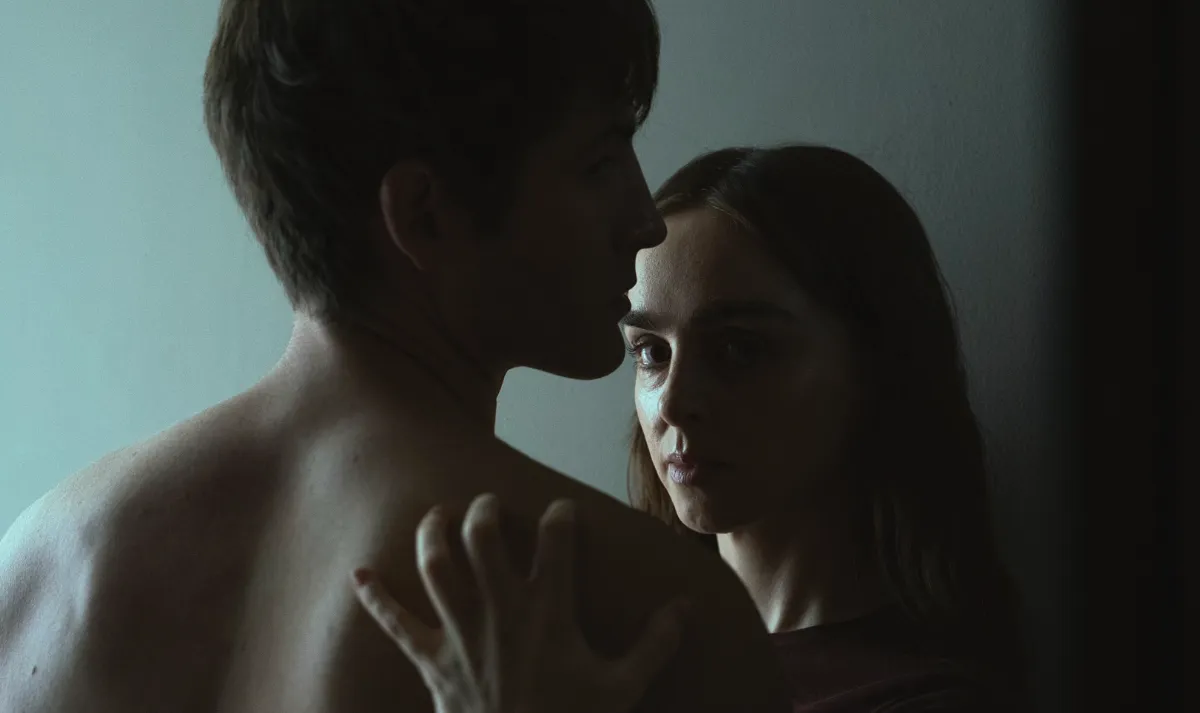
Directed by Zac Ruzicka and starring Yves Heck, this striking queer mystery explores grief, family secrets, and the profound cost of the things we leave unspoken.
What was it about the story of Threefold that made you want to bring it to the screen?
Tallulah Bond (Writer): How three people can love one person in very different ways. It’s about love and hate and how those things can and will always exist with the other.
On a separate note, the setting of rural France was something I wanted to show audiences. How a place and its tangible personality can influence the dynamics of an unlikely trio of people. I loved exploring the emotional weight of the house and how it impacts the story; revealing clues to the characters. I also just loved the balance of tension and freedom the siblings have and how they bounce off one another. They see-maybe subconsciously-what the other has that the other lacks.
On a personal note, I wanted the story I’d written with one of my best friends and collaborators to be seen by everyone because it was such an enjoyable experience, one to be repeated time and time again!
The film explores queer identity across generations, alongside grief and family secrets. What did you most want audiences to take away from that exploration?
Macauley Keeper (Producer): Threefold explores the idea that queer identity can take shape in multiple ways, informed not only by who we are, but by society, generational judgement, and our own relationship to that identity. As a queer person myself, I was particularly interested in the complexities of navigating sexuality against a history of oppression, and its reverberations through our private lives.
Equally for Lawrence, grief is deeply entangled with his sexuality. However, it was very important to me that Threefold never became a film defined by queer suffering or hardship. At its heart is something much more enduring: a profound, long-standing and unflinching connection between two people.
The tragedy, perhaps, is not in that love itself, but in the circumstances that have so often required it to exist in the shadows.

The idea of discovering a parent anew after their death feels particularly powerful. What does the film say about how little we can sometimes know about the people closest to us?
Tallulah Bond (Writer): I think the best stories rely on their subtext. It’s always about how and why people hide things from the ones they love. I think hiding pain from the people you love is an interesting dichotomy. You want to protect them but also want to be vulnerable and truthful.
Threefold is a mystery as much as it is a psychological drama. It’s about delving into someone’s past and realising they are just a human being. They might indeed be a beacon of goodness, morality and strength, but they also might be everything you stand against.
The question then is do you accept them for everything? Or keep their memory buried along with your own imperfections?
You shot the film entirely on location in rural France. How did the landscape and setting shape the atmosphere and visual identity of the film?
Zac Ruzicka (Director): The location set the stage for everything. We weren’t trying to cheat rural France or recreate it somewhere else. The actors, the crew and the story were all fully inside that place, and I think that shaped the film by default.
What I loved was the contrast. The story has this unease running underneath it, but the surroundings are saturated, beautiful and full of life. That tension became a big part of the visual identity: the film isn’t dark because the world is dark. It’s unsettling because something painful is happening inside a place that should feel warm, open and alive.
The house itself also shaped a lot of my directing approach. At first, you mainly see the problems: the courtyard is too wide, the window is too narrow, the hallway is too short. But then those limitations start making decisions for you, and you find ways to make them support the story. By the end of the week, the house felt like a presence.

What was the shoot itself like? Were there any particular challenges or unexpected moments from filming in rural France that have stayed with you?
Zac Ruzicka (Director): The shoot was great. The first couple of days were tough because the sun was relentless, but that was exactly what we wanted.
The film needed to feel hot, exposed and slightly uncomfortable, so the conditions fed into the atmosphere. The scene that stayed with me most was the final confrontation between the three main characters. I made a decision to trust the actors, not over-prescribe it or block to death, and let the scene play out on a closed set. Watching them bring that much to it was amazing.
It was probably the most intense day of the shoot, but also the most beautiful.
What also surprised me were some of the surrounding locations. We’d turn up somewhere we had recce’d, and suddenly these beautiful flowers had bloomed. Being in rural France with a small team also made the whole thing feel disconnected from everyday life, which I loved. You could focus on the film and the world we were building.
You’ve brought together an international creative team, including Yves Heck and cinematographer Adam Singodia. What did they each bring to the project that surprised or excited you?
Macauley Keeper (Producer): I’m immensely proud of the team that brought Threefold to life, and we feel incredibly privileged to have shared the experience with such extraordinary creatives and filmmakers.
Bringing Yves Heck onto the project gave us a level of authenticity that we had been searching for in Lawrence. There is a tension in his performance between vulnerability and guardedness; he allows you to sense the emotional life beneath Lawrence’s defences without ever overstating it. Yves’s experience was also invaluable to us as actors and filmmakers, simply observing the precision and generosity with which he works on set was an education in itself.
Getting a yes from Adam Singodia was, genuinely, one of the highlights of the film’s development. His visual sensibility is extraordinary, and he understood instinctively the world we were trying to create, bringing a richness and emotional texture to it that went beyond what we had imagined. There were moments shooting with Adam, in our beautiful location in the French countryside, that felt slightly like a fever dream. Watching the visual language of the film emerge around us was incredibly
exciting.

The film’s premiere will support Anna Freud. Why was it important to connect Threefold with mental health and use the film as a way to open up that wider conversation?
Macauley Keeper (Producer): Mental health is woven very quietly but fundamentally into Threefold. The film is concerned with the things we carry privately (grief, shame, secrecy, identity) and with what can happen when those experiences remain unspoken for too long.
Supporting Anna Freud through the premiere felt like a meaningful way of extending that conversation beyond the film itself. Their work with children, young people and families speaks to the importance of creating spaces in which difficult emotions can be understood and articulated, rather than hidden away.
If Threefold is ultimately interested in anything, it is the cost of silence, but also the possibility that comes with breaking it. To be able to use the film, even in a small way, to encourage greater openness and support work that gives young people the language and resources to understand themselves felt incredibly important to us.

Leave a Reply