
By Genevieve Dammery
Following her win at South London Film Festival (Best Narrative Feature), we sat down with Writer and Director Julie Pacino to discuss her debut feature I Live Here Now. WARNING: this interview contains spoilers for I Live Here Now.
Julie, thank you so much for joining us at Close-Up Culture. Did you just want to begin by telling us a little bit about your experience of coming up with the idea for I Live Here Now? I know it originally started as a short film. What made you decide to turn it into a feature film?
It started as a short film that I wrote during COVID that was about a woman who was trapped in an Airbnb. I had just written it because my friends and I were going crazy, like everyone else was, during the pandemic, and we were going literally just rent an Airbnb and make this short about this woman who was trapped. At the time, the Airbnb was an allegory for Los Angeles, which is where I happened to be stuck. I’m a native New Yorker, and when COVID hit, I got stuck in LA and I was going stir crazy.
I was sitting with the ideas and sitting with my feelings, and it was a very introspective time, and I started to realise that there were ways in which, I was stuck inside myself. [There was] some stuff from my childhood and some stuff with my sexuality that I hadn’t confronted or been forced to confront, and so the ideas began snowballing, and I realised that it could be interesting to explore it in a more long-form way and lean even heavier into the allegory of being trapped within yourself and being forced to face these different aspects of yourself. That’s how the concept for a feature started; it felt like there was enough material to make it a full-length thing, and that’s ultimately what Rose’s journey is. Once she checks into herself, it’s about coming to terms with all that stuff. It snowballed pretty quickly. We decided not to shoot it as a short and just go full steam ahead and try to make it a feature.
I’m so glad you made it into a feature! It’s a film that’s deliberately difficult to pin down. How much did you want audiences to understand what was literally happening versus simply having them experience Rose’s psychological state as they watch the film.
That’s a great way to put it. Deliberately difficult because the film is meant to capture the feeling of healing, and that process is difficult and frustrating, and repetitive and confusing and weird, but also sometimes beautiful. So, it’s definitely by design. That’s the kind of art that I like for the most part. I hope the film, even if it’s frustrating or difficult, there’s still always something you can be entertained by. It’s pretty to look at. The music is good. I want the viewer to, you know, trust in themselves and in the film enough to let go and just kind of let it, let it happen, and then process it afterwards. It’s not really meant to be processed in real time.
I love watching movies that challenge me and then unpacking them with my friends or rushing to Reddit to read a theory. I love that, and so that’s really what I wanted to make for my first feature. I love having conversations with people about it. I feel like I take something new from it every time I watch it. I like the idea of making a movie that if someone wants to revisit it in a month, a year, 10 years, even, that there might be new things to take from it, and new things might occur from it. I like the challenge when it comes to art.

Okay, so moving on to a bit more about Rose and her body, because it’s almost like her body becomes a character in the film. You know, we have pregnancy, trauma, sleep paralysis. What did you want the film to say about the relationship between the body and memory and trauma?
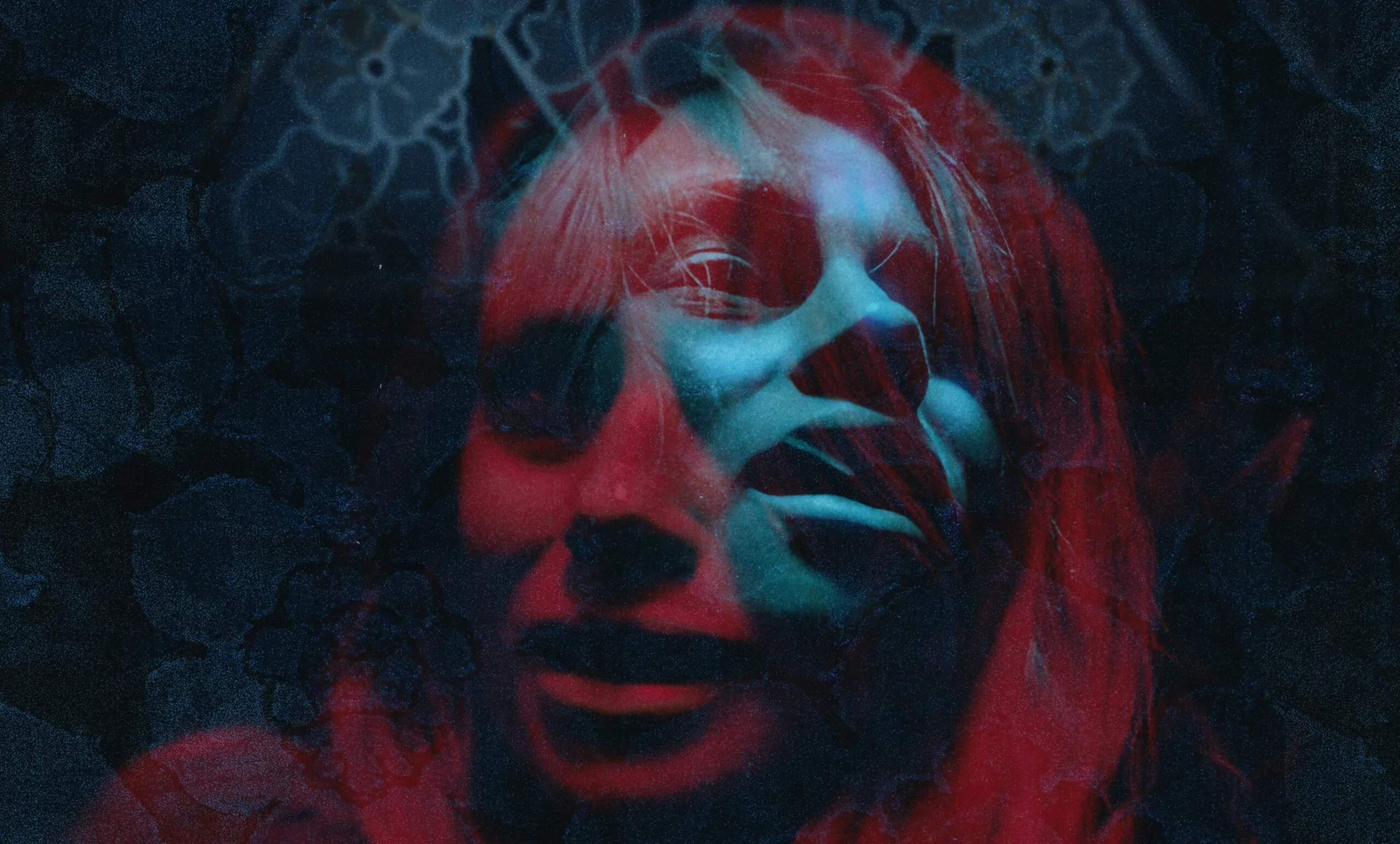
The body remembers, that’s the main thing. And even though Rose doesn’t quite remember, or in my estimation, she’s created some sort of fairy tale about a surgery to protect herself from the actual truth. But when she checks into her body, there’s something off. Sid is in there and hasn’t been seen or heard from in a while, and the corners are kind of dusty. It’s kind of sparse, the lobby and the hallways, it’s feminine and sparse. And but then when she checks into ‘the loving oven’, the central core of herself, it’s this really vivid, fleshed out [room] with detailed wallpaper. There’s way more depth and dimension because that is her deepest roots.
One of the things that [the film] is saying is that it’s so easy to create these stories to protect ourselves from something that we’re so afraid of, that trauma is deep-rooted and ingrained in our bodies that we’re holding onto, but we don’t know why. That’s very much Rose in the first act. She’s taking these pictures of herself. She’s drawing the crowns and has this boyfriend. It’s just all this external searching that she’s doing. She doesn’t feel right, but she doesn’t know why, and she doesn’t realise the answers are within herself until she’s kind of like out of places to run, and she has to go into herself.
And really, the statement at the end that I’m making about this woman and her relationship to her body is that she’s able to look her fear and her trauma and her shame right in the face and purge it in the form of this crown and then wear it proudly, like “This is part of who I am, and these horrible things may have happened to me, but they’re what makes me, me and they’re beautiful, even though they’re jagged and bloody and gooey and imperfect”. It’s beautiful, and it’s my crown, and when I wear it, I can declare I live here now, and that’s true power and true triumph, not perfection. It’s embracing the jaggedness of this branchy life that that we’re all in, and especially us women.
Initially Rose’s career is presented as this thing that she wants the most. She’ll do just about anything, like lose three pounds in a couple of days. And then all of that becomes entangled with this idea of control and exploitation. What is it in particular that you wanted to say through the film about pressures placed on women to make themselves into something more marketable?
Yeah, that’s just a fun touch of satire because how would anyone even know if you lost or gained three pounds? It’s such a funny number, and it’s based on real experiences. The thing about this movie is a lot of women came together to make it. Rose became this composite character. So, fortunately, I don’t have a passion for acting, so I’ve never had to be in that seat. I’m behind the camera, so it doesn’t matter as much. Although it is really crazy being a woman in this business, trying to be assertive and have opinions without being called difficult or emotional. That is a wild thing that I learned while making this, which I’m excited to express some things about in the next one.
But I think it’s just a relatable thing. Rose being an actor really made sense to me thematically because it feels like she’s acting in her life. She is convinced that the only thing she’s been good at since she was little is acting. She says it. [It is] as if something happened her, and she’s been acting her whole life trying to pretend like this didn’t happen to her, and so it made sense to me that she would be pursuing a career as an actor. And of all the careers, that’s one of the top ones where people are hung up on your appearance, and your appearance is so important. And then you also have this loser that she’s dating, and his mother, trying to decide what to do with the baby, and trying to decide things for her.
I was commenting there on the power structure of the patriarchy. It doesn’t necessarily have to be a man that’s exerting it. A lot of times women can do it to other women, and when that happens, it’s just so devastating because we’re supposed to have each other’s backs. There’s some stuff in the first act that’s definitely a commentary on the world today and where we’re at.
You talked a little bit about how everyone kind of inputted their experience [in developing Rose], and I know you’ve previously spoken about Lucy Fry being involved in shaping Rose’s character as well. What did she see in Rose that you hadn’t initially seen yourself?
A lot, honestly, and that’s what I was looking for. That’s why it was so hard to cast her character. I knew I needed to partner with someone who was willing to be vulnerable and fearless. And especially since it was my first feature, it was really challenging. It [felt like] everybody in the world passed on this role, even some that got really close and that really understood the assignment.
But Lucy, our first call was just a general meeting. She had read the script, and we were going to talk about it, from the jump [she] started getting into ideas about motherhood and Rose’s relationship with her mother. That was really a thing that Lucy helped crystallise, and what was Rose’s shame versus what was her mother’s shame that she was carrying. This is an important aspect I think, sexual abuse survivors just have to deal with shame about it, there’s this fear to tell people because of this stigma. Lucy really helped crystallise that stuff.
And then that last scene with her when she’s on the table. I didn’t really know exactly how it was going to play out. There were different versions of it in the script, and sometimes I’d cut that scene out. We didn’t really know what was going to happen, but we built trust between each other and created a super safe space on set that day. She was like “Hey here’s what I need to get to this really insane spiritual space”, and I built it for her, and loaded up an 11-minute mag, and she just went for it. It was really profound.

What is it that horror can communicate about women’s experiences, in particular, that a more conventional drama (or any other genre) may struggle to?
Horror offers such a wide spectrum for expression, and it seems to be an easier barrier of entry because you go in with your guard down a little bit more, or at least like that’s my experience as an audience member. With horror, you see the trailer, and you sign up for this entertaining experience. It feels like it’s easier to get the audience on board by packaging it in this horror genre, it enables the audience to take the trip with you.
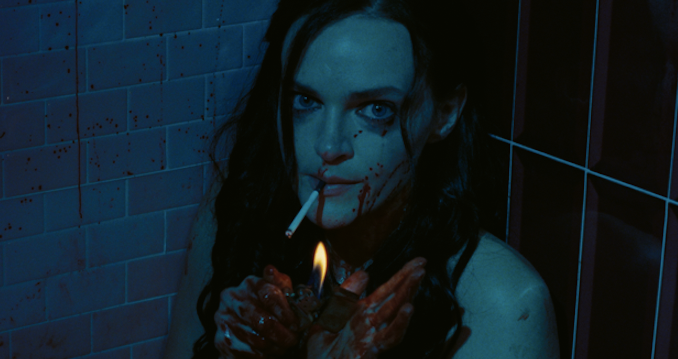
In first act I’m trying to set it up as this sort of more traditional horror film. It’s got these funny moments, and Matt Rife is hamming it up and doing whatever the fuck he does, and so the audience is like, “Oh okay, yeah, girl on the run. They’re gonna try to find her.” So, you hopefully buy in, and then once I’ve got you, I’m able to really start taking the training wheels off and just let it go. Horror, for some reason, gives that permission. At least I feel that way when I’m creating in the horror genre space as opposed to a straightforward drama. I also think it’s just easier to express these things, in a symbolic way than a straightforward drama about a girl and her trauma. It just gets a little bit heavy and can be alienating.
There’s that funny tension in the film between you know the real like genuine horror and then these campy, absurd moments which are thrown in. What does that humour allow you to do as a filmmaker that you know just having a straight up horror film doesn’t?
Yeah, that’s exactly it. I love camp, and I love that the genre allows for it. I love laughing. I think that when you have some heavy material and a character that’s as grounded and raw as Rose, it’s really fun to balance that out with these intentionally over the top characters around her, that are not over the top for the sake of being over the top. They’re so comically big from Rose’s perspective, but it just adds a little bit of relief to this fucked up world.
I’m a big Alice in Wonderland fan, I find that film so funny, and there’s all these crazy characters, and Alice is like weirded out at first. She’s like, “What is this place? and “Ugh, Mad Hatter, and this stupid cat, and it’s like, “What the heck?” But then by the end, she’s the queen of the place, and she loves them, and they’re her best friends. That was the intention with the characters at the end in I Live Here Now, where at first it’s like, “Oh, what the heck”, and then as she gets to know them and they take on new meaning, they’re just parts of herself. She’s embracing them more than she is like weirded out by them. I love making people laugh, so it’s important to me in horror to have a laugh along the way.
Now that you’ve made your first feature, what has the film taught you about the kind of filmmaker that you want to become for any future work?
That’s a great question. I learned a lot about trusting my instinct from the very beginning all the way up until you know designing the cover for the Blu-ray. I met some challenges because there were a lot of people who knew more about making movies than I did. People who knew more about releasing movies than I did would gaslight me and tell me, “No that’s not the way you should do it, this is how it works”, and I really fought for this film every single day.
If I had a strong instinct about something and my producers who I was close to and trusted, would really tell me how it is. If they were like, “Yeah, we agree with this instinct”, then I’d fight for it because even though it was my first feature, I just knew that there were certain ways that things had to be handled. I think that ruffled some feathers, but I’m glad that I did it. And I guess that’s the bottom line. Coming out of this, I don’t know that it will ever be easy.
Hopefully it’ll be easier on the next one because I’ve made [a film], so now I can’t be told, “Well you’ve never done this before, so shut up and just listen”. I think it will probably always be pretty challenging, and it should be. In a sense I know I’ll always have to fight for my art, and fight to preserve the artistic integrity of it. There were just so many battles, there were thousands of battles along the way, where I had to fight for the film to be the way that I knew that it had to be, or I felt that it had to be. That fight was worth it because there was a lot of a lot of people and a lot of women who did really brave things and put themselves on film in this, and they deserve to have a director who fights like that, and so that that’ll be the thing with me.
On the next one, it’s just no fear and not pulling any punches, and trusting my gut, and trusting that if I fight to make a movie that is the type of movie I would want to see, then there will be an audience for it. That’s what I learned from this one. It’s a strange movie, and it’s certainly not for everyone, but it’s but it is for someone, and I’ve connected with a lot of those someone’s through this process. That has in turn made me feel less alone as a woman and as an artist, and that’s the whole point. It’s that connection and even conversations like this, you know. I’m really proud of that and I’m going keep making movies that way.


Leave a Reply