

By Genevieve Dammery
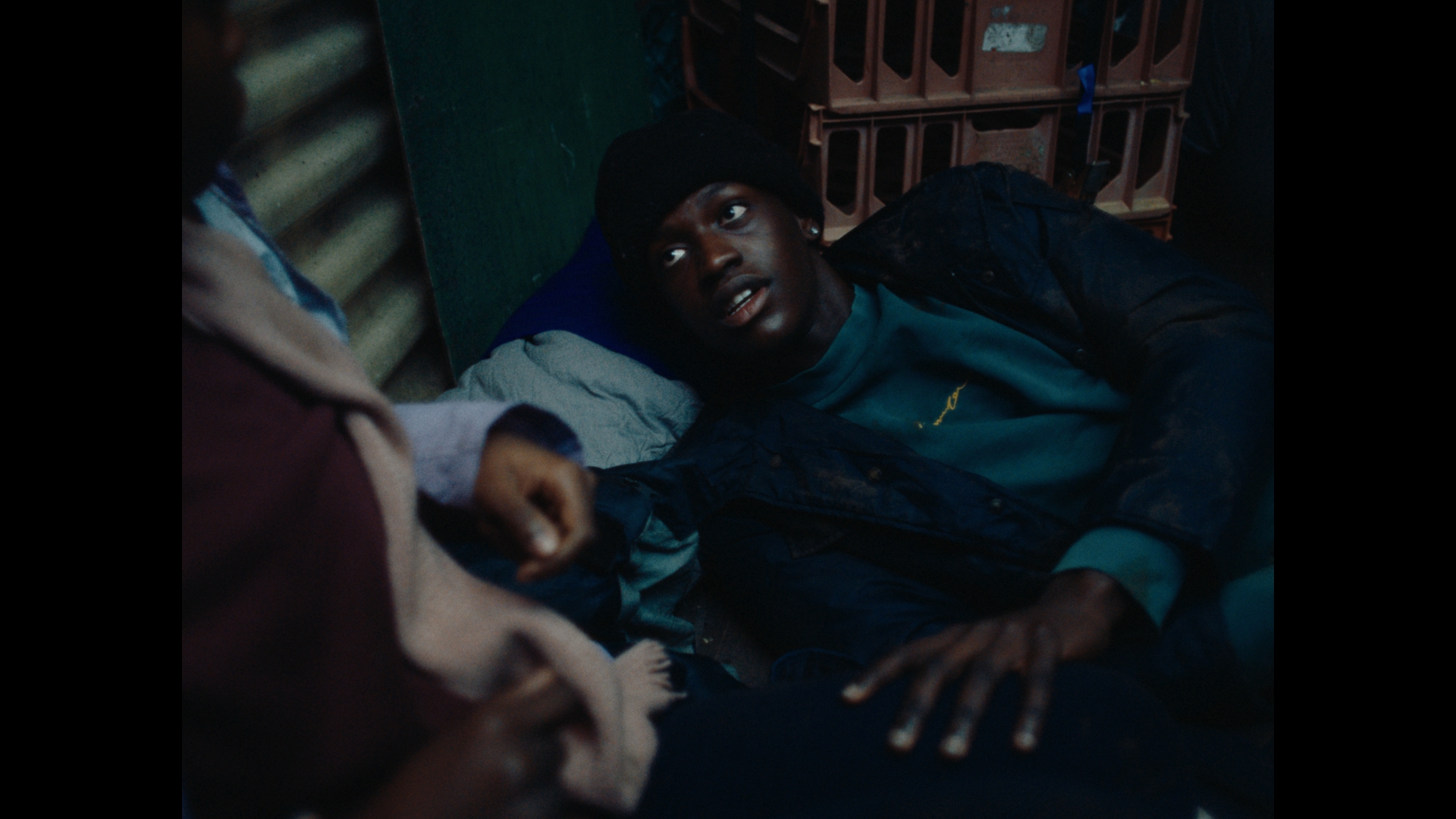
It is a journey that thousands make each year, but it is rarely told with such humanity and vulnerability. Trapped inside the suffocating confines of a lorry container alongside dozens of refugees, Olly Ginelli’s The Long Spring follows siblings Arron (Warren Mendy) and Kika (Assiba Blejah) as they embark on a journey that promises safety but increasingly threatens to become a fight for survival.
Arron has chosen the route. He has told Kika that their destination will offer them a safer future. Initially, his optimism provides Kika with something to hold onto. But as hours pass and reality sets in, reassurance becomes increasingly difficult to maintain.
Ginelli makes an inspired choice in restricting almost the entire film to the interior of the lorry. There is no escape for the characters, and increasingly, there is no escape for the audience either. We are given little sense of what lies beyond the metal walls, meaning that the same uncertainty experienced by Arron and Kika becomes our own. Every sound from outside carries the possibility of danger. Every passing minute intensifies the claustrophobia.
The result is a thriller that requires remarkably little spectacle to generate tension. There are no sprawling chase sequences or elaborate sets; instead, The Long Spring finds horror in waiting. The camera, performances and sound work together to make the container feel progressively smaller and more oppressive. What begins as an uncomfortable journey gradually approaches psychological torture.

At the centre of it all are Mendy and Blejah, whose performances give the film its emotional core. Mendy captures Arron’s increasingly fragile attempt to remain composed, particularly as the responsibility of protecting his younger sister begins to overwhelm him. Blejah, meanwhile, brings a vulnerability to Kika that makes her fear impossible to dismiss.
Ginelli has stated that one of his motivations in creating The Long Spring was to provide a space for conversation around the refugee crisis and modern slavery. One of the factors that makes The Long Spring so successful is that it does not attempt to deliver this through exposition. Instead, it makes the audience sit inside the fear and the journey. The film does not ask us to understand the refugee experience through statistics or headlines; it asks us to experience, however briefly, the fear and uncertainty of being completely dependent upon strangers for your own survival. It transforms something that can feel abstract when only ever seen through news reports into something immediate and physical.
The Long Spring is so effective because its politics never overwhelm its humanity. Ginelli has created a film that is undeniably concerned with a contemporary issue, but its strongest moments come from something much simpler: a brother trying to reassure his frightened sister when he is becoming increasingly frightened himself.
Tense, intimate, and deeply unsettling, The Long Spring demonstrates how powerful short-form filmmaking can be when a simple premise is executed with conviction. Its greatest achievement is making an enormous global crisis feel intensely personal, reducing the language of borders, migration and trafficking to two people sitting in the darkness, waiting to discover what awaits them on the other side.
It is a difficult film to watch, but an extraordinarily important one to see — and one that stays with you long after the credits roll.
Follow Olly on Instagram here: @oginelli
Follow The Long Spring here: @the_long_spring




Leave a Reply