
By Genevieve Dammery
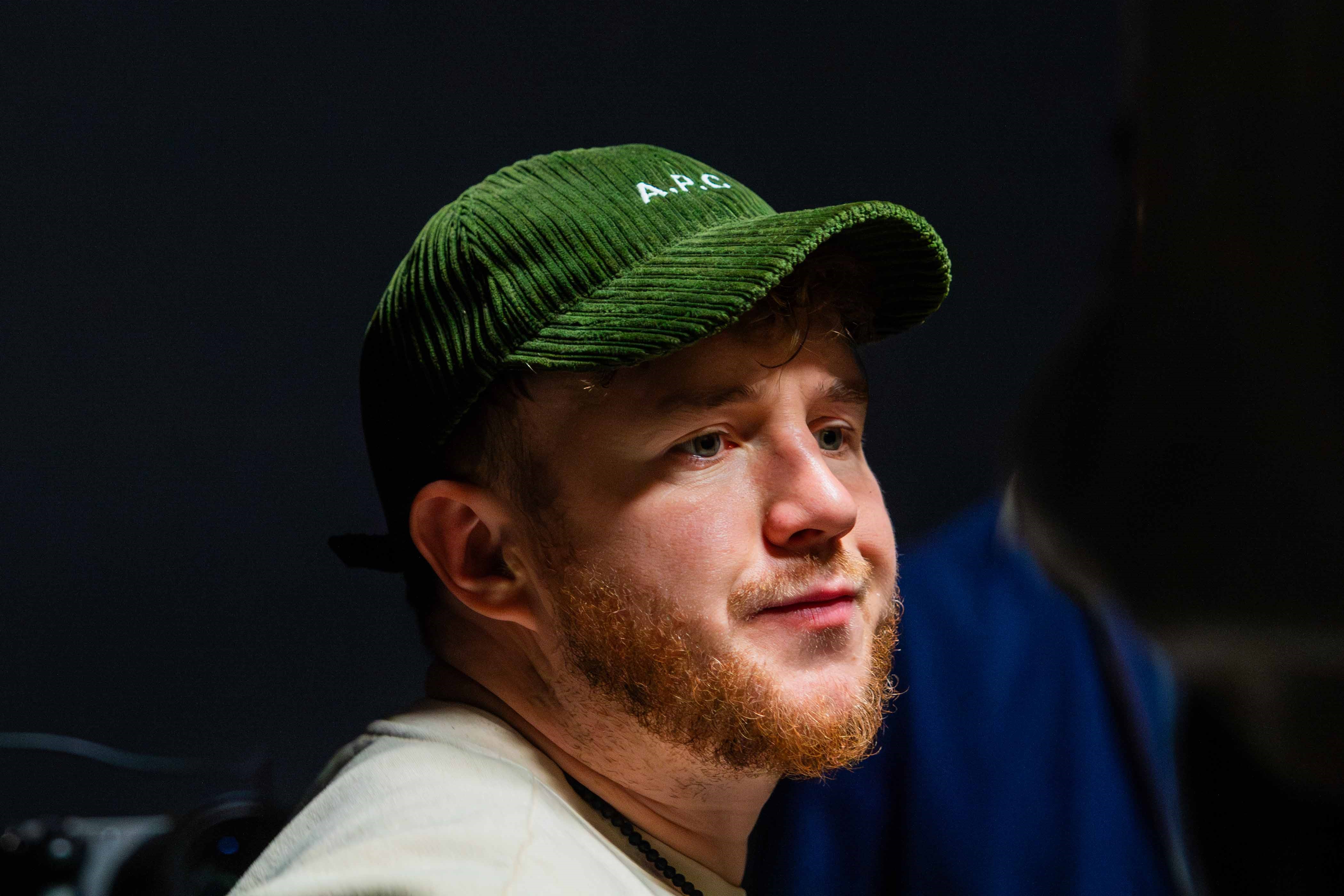
Following South London Film Festival, we sat down with Olly Ginelli to discuss his Jury Prize-winning film The Long Spring. WARNING: this article contains minor spoilers.
CUC: Olly, welcome to Close Up Culture. Do you want to just begin by telling us a little bit about your film The Long Spring and a little bit about your background?
OG: This is my second narrative short film, and we’re coming towards the end of our festival circuit now. We’ve got the Jury Prize at South London Film Festival, which was an honour, and we’re qualified for the BIFAs and the BAFTAs. Even just getting qualified was a real dream. And a bit about myself, I was a breakdancer before I was a filmmaker. I’ve always been interested in creative careers.
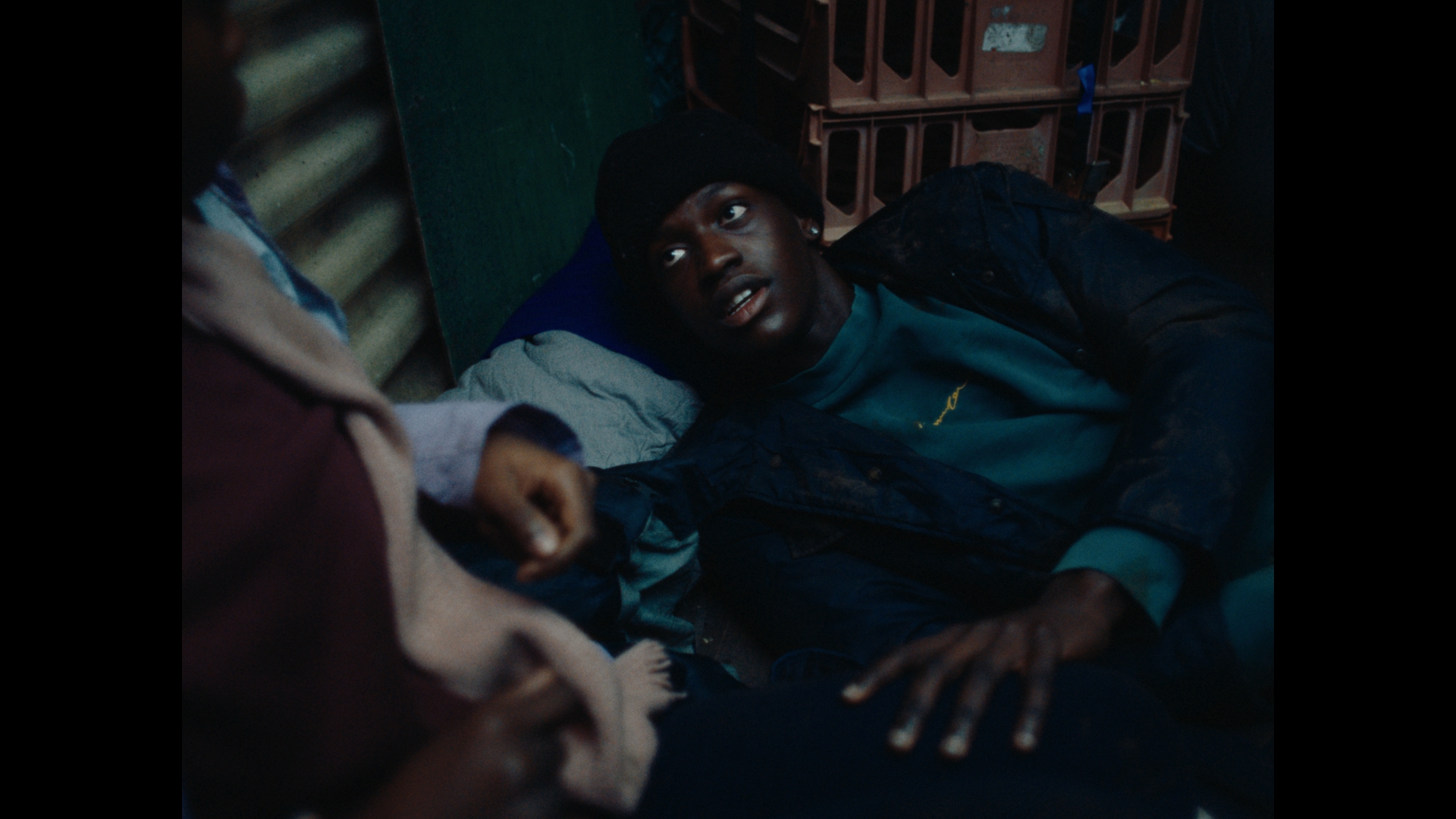
The Long Spring is a film about human trafficking and about a brother and a sister who are in the back of a lorry with a mixture of different refugees, and it was inspired by the time that I spent volunteering in the Dunkirk refugee camps where I saw human traffickers operating and when I learned that was taking place. One of the refugees who was in the camps made it into the UK, successfully claimed asylum, and found me on Facebook. We met up, and he told me stories about the back of the lorries, which is what inspired The Long Spring.
CUC: Yeah, it’s an incredible story, and an incredible responsibility to tell this story, especially when it’s been, in part, inspired by someone’s particular experience. Could you tell me a little bit more about how you navigate the responsibility of telling a story that is inspired by someone’s experience while still creating a fictional world?
OG: The word you use there, responsibility, is exactly the right word because I felt a lot of that, and a lot of pressure. The refugee who made it over here, I was just consulting him throughout every stage of the process. We brought him down to set, and he and he met some of the actors who were playing the lead parts, and he told them some of the stories of what it was like being in there, and they actually got to meet the person with the lived experience. Then we showed him the film as well. He was my first audience, really, and when he saw the film, he said he was so glad that someone was telling this story because no one gets to see what happens inside those lorries. One of the scenes is directly influenced from what he told me, the toilet scene with Kika, the younger sister. So as soon as he told me that I had portrayed it accurately, then [it was] mission complete from that point. All the festivals and everything else was an added bonus. As long as I did right by him, that was the main goal.

CUC: The film deals with migration and human trafficking, topics that we hear discussed in a really abstract way through statistics, usually, or fear mongering. What is it that you wanted to explore by bringing a story like this down to a handful of characters in the back of a lorry?
OG: With the handful of characters, I didn’t actually go for accuracy in the breadth of characters that I cast, and that was the only deliberate bending of reality, because I wanted to show that there is a mixture of nationalities in there, Asian and Middle Eastern, West African, because human trafficking is in every country on the planet, unfortunately. I just wanted to have a wide demographic to represent that. You don’t really find out much about the people’s backgrounds in the film, and that was partly deliberate because we’re planning on turning this into a feature film, and it’s so hard with a short film. I just try to really focus on the intimacy of the relationships in the back of that lorry and what goes on in your mind when you don’t have any information about how long you’re going to be there, and how much water you’ve got left, etc.
CUC: Why was it that you wanted to show the relationship between a brother and sister in particular? Was that a deliberate choice to have the two of them together, or was that based off you know a particular experience of anybody in the camp in Dunkirk?
OG: The truth is, because I wrote the script so long ago, I can’t remember my exact route of landing on the brother and the sister. What I can remember, however, is the toilet scene, [which was] directly inspired by the refugee who told me about his experiences in the back of those lorries. I knew there was going to be a female character, and then I think the older brother is someone that I could sort of write myself into. The older brother has got a lot of bravado and he’s just trying to keep his little sister safe. He does mature through the journey of the film and realise that actually being a man is about accountability and vulnerability, rather than bravado. And then to answer your part about the camps, unfortunately there were a lot of children in the camps that I met, around the ages of four and five years old, and you just think, “God, what are you doing here on the side of the motorway”. It was important to me to have youth in there. The two leads that I cast, they’re older than they’re meant to be in the film, but they both have very youthful faces because I wanted them to look like teenagers to represent the fact that this is happening to kids.
CUC: How did you work with the actors to establish that sibling relationship on screen when you’ve got such a short amount of screen time?
OG: The prep was a big part of that, and I’ll be honest, there’s a lot of luck as well. Because as soon as I put Warren and Assiba together, they got on like a house on fire. It was like they’d known each other for 10 years. You leave them alone, and they’ll just talk like friends. And I was like, “Oh my god, this is great”. The chemistry was just there. But one of the things we did do is tonnes of prep, like two or three rehearsals, and before we did any rehearsals, I just sent them out to have a meal out, to get to know each other. Because I think when the actual actors know each other, that is going to come through with the characters on screen, and I feel like it did.
CUC: Was there anything from the film that you found kind of difficult to leave out when making it a short film? You’ve spoken about how it’s a proof of concept and you’re going to make it into a longer piece. Was there anything that you had initially planned but had to leave out, and how do you go about that?
OG: The original cut of the film when it went out on the festival circuit was about 16 minutes long, but it wasn’t performing as well. The film opened with the older brother Arron telling his younger sister a story. It’s kind of a biblical story that their mum used to tell them when they were younger, and the story is all about perception and how, no matter what your circumstances are, you can perceive them to be good; it’s about how you handle situations. But starting a film with a 90 second monologue is quite slow. So, what I learnt about the festival circuit – and this is like good advice for any young filmmakers – is that you want to fly out the gates with your story for a film to be competitive, whereas in the in the cinema context, people are there, they’re comfortable, and they’re engaged with your story. But if a programmer has to watch 20 to 30 films, you’ve got to throw them into the story. It was hard to cut that because a lot of people liked it, but you want to do well at the festivals to then help get the feature made.

CUC: Is there anything about the film that you hope the audiences notice that they might have kind of initially overlooked.
OG: There’s there is a small moment that I’ve only heard one person say to me that they noticed. There’s a character played by Aymen Hamdouchi, and he’s at the other end of the lorry. He’s the older man who has been around the block and is a little bit more skeptical and cynical of what can go wrong in these situations. He has a text in the film, which alludes to the fact that he’s fled a war, and the person who is texting him says “You’re a coward, even wives and daughters are picking up arms, and you should be here”. His brave act at the end of the film to save Arron was me trying to give him an arc in this tiny, short film space, because he feels so guilty about not fighting in whatever war he’s fled from at home.
CUC: I got goosebumps as you were just saying that! It’s kind of thing that sits with you. The Long Spring ends on a cliffhanger, but I suppose that must be how you felt being in these camps and seeing and meeting people, but you don’t know what happens to a lot of them, and you can only hope for the best.
OG: I’m really glad you said that because that’s what we were going for. You always take a bit of a risk whenever you make a film with an open ending, whether people get that the open ending is deliberate. Because a lot of people say, “Oh, I want to know what happens to them”, but that’s the point. You don’t [know], and we don’t know what happens to hundreds of thousands of people around the world. So, it’s the right question to be asking. Obviously, when we get to the feature film, we’ll try and tie off those stories, and it’ll be more of a satisfying ending. I’m still writing it, so we’ll find out!
CUC: Was there a moment during production where you looked around and thought, “This is why I wanted to make this film”?
OG: Yeah, there was one really distinct moment. It was a three-day shoot. The first few days, we were shooting in the lorry, and the lorry was in a studio. But then the third day was on location just outside of London. It’s one of the most dramatic moments as a director, when you know when it’s working, and you can feel that you’re achieving what you need to in the scene. Huge props to the cast because if you cast right, you don’t really need to direct much. All respect to them and all the HODs, of course. But it’s the moment when you realise that men and women are being put in separate vans, and [the actors] just absolutely went for it from the first take, and I remember I was looking at the monitor and I looked over to my producer and I was like “this is it”, it feels like cinema. It’s a weird feeling to be happy with something which is such a tough scene, but you’re happy for the reason that you’re doing it justice because it is it needs to be tough, it needs to be hard to watch.
CUC: Yeah, exactly. That scene gives a bit of resolution, and then just leaves you with more questions, which, as the viewer, is exactly what you want. It sparks a conversation and an opportunity for you to go and look up people who have these stories, find out more about their experiences.
OG: I would hope people do that. One of the things I want to do with the feature is to show you these people’s backgrounds. Because when I was in the camps, a lot of the people I was meeting were middle class; architects and doctors, and you just don’t hear about that in the heated debate which we get in the media. But some of these people had swimming pools, and then their house was turned to rubble, and they didn’t want to come to England. But if your whole house has been destroyed, then you have got no choice. No-one talks about the architects and the doctors and the nurses that are coming over. The refugee who made it here and who inspired the film, he was a volunteer for refugees when ISIS invaded the towns next to him, and he speaks four languages. These are good people.
CUC: Hopefully more people will continue to have these conversations and hear more of these stories and read more.
OG: We partnered with Choose Love not too long ago, and it’s a charity like that just gives you so much hope because they do focus on those things. But a few wrong clicks online, and you know your algorithm can take you down some horrible dark holes. Even the way that things are titled online, you can see people are just trying to incite so much anger and rage baiting. I manage to avoid it, but just I think about all those people who are clicking on those links and who are getting fed that narrative, it’s tough. I try not to think about it too much.
CUC: You mentioned earlier that you came to filmmaking after working professionally as a breakdancer. Do you think your understanding of movement and physical performance affects the way that you make films and work with actors?
OG: I’d love to think it does. It’s hard to hard to really put into words. There are definitely some transferable skills, when you when you come from a dance background and specifically a professional dance background, you spend a lot of time in rehearsals being physical with people and climbing on top of each other. If you’re doing lifts or holds you become very comfortable with proximity and close space. And I think physicality is probably a big part of my creative exploits. I think that’s probably the main transferable part of breakdance.

CUC: Tell us what’s up next for you. You’ve talked about how you’re going to turn this into a feature. What else is happening? Where can we watch the film?
OG: We have some big news coming soon, but I can’t say exactly what it is. You will be able to see the film online, but it’s going to be attached to a wider project, which is very cool and heartwarming, and something that I think everyone can get behind. And that news will be on our official Instagram, which is @the_long_spring. We are working on the feature film version of The Long Spring, and we’ve also written the first two episodes of a TV series for later down the line. And we’re BIFA from BAFTA qualified, so hoping and praying for that. Even a long list would be incredible.
CUC: Thank you so much for joining us. It’s been so lovely to hear a little bit more about your background and about The Long Spring.
Follow Olly on Instagram here: @oginelli
Follow The Long Spring here: @the_long_spring





Leave a Reply