
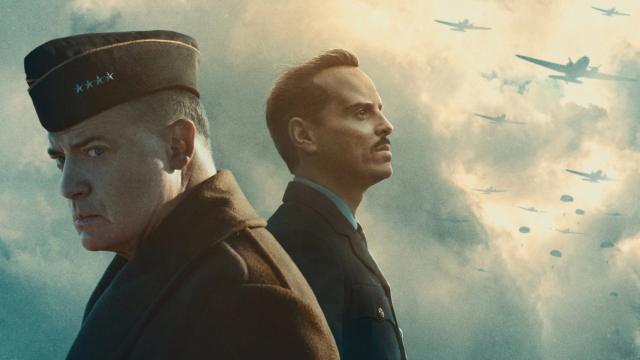

We Brits are world leaders in whining about the weather. In Pressure, though, the forecast isn’t polite small talk; it holds the very fate of the Second World War in its hands.
Adapted from David Haig’s play, the film unfolds over the tense 72 hours leading up to D-Day. Scottish meteorologist James Stagg (played by Andrew Scott) must determine whether atmospheric conditions will allow the largest seaborne invasion in history to go ahead.
It’s a brilliant premise for a thriller precisely because there is no certainty. Stagg trusts in his science, but even the best forecasting cannot eliminate doubt. What weighs on him isn’t simply the possibility of getting it wrong, but the catastrophic cost of doing so. Thousands of lives rest on his judgement.
Andrew Scott is superb, masterfully capturing the agonising responsibility of a man forced to trust his methods when the stakes are unimaginable. You can almost feel the torturous calculations behind his stern exterior. The true suspense doesn’t lie in wondering whether Stagg is right, but in watching him confront the terrifying weight of committing to that judgement.
Because this is essentially a film about very important men arguing in war rooms, it lives or dies by its performances. Scott brilliantly carries the film, but the supporting cast struggle to reach his level. Damian Lewis is entertaining, if a tad hammy, as General Montgomery. Meanwhile, Chris Messina is perfectly fine as American meteorologist Irving Krick, providing a lighter counterpoint to Stagg’s intensity. Ultimately, their opposing positions are drawn a little too neatly to make their disagreements as compelling as they might be.

Brendan Fraser’s General Dwight D. Eisenhower feels somewhat out of step. His performance is too larger-than-life – quite literally, as the camera draws attention to Fraser’s imposing size – making it difficult to see past the beloved actor playing the part. Kerry Condon, meanwhile, makes the most of Kay Summersby, Eisenhower’s real-life secretary, an intriguing figure who leaves you wishing the film had given her more to do.
The relentless countdown to D-Day gives the drama a welcome sense of momentum, even though much of the story is confined to war rooms. That limitation works in the film’s favour, keeping us trapped alongside these men as they wrestle with a decision we know they cannot avoid. When the film finally breaks out of those rooms – first for one forgivably contrived church scene, and then for the horrors of D-Day – the shift lands with real force.
Beyond Scott’s central performance, this isn’t the heavyweight thriller it could have been. But, still, Pressure succeeds at something deceptively difficult: turning a historical certainty into a compelling human drama about the agony of risk and decision-making.
Pressure is in cinemas on September 9






Leave a Reply