
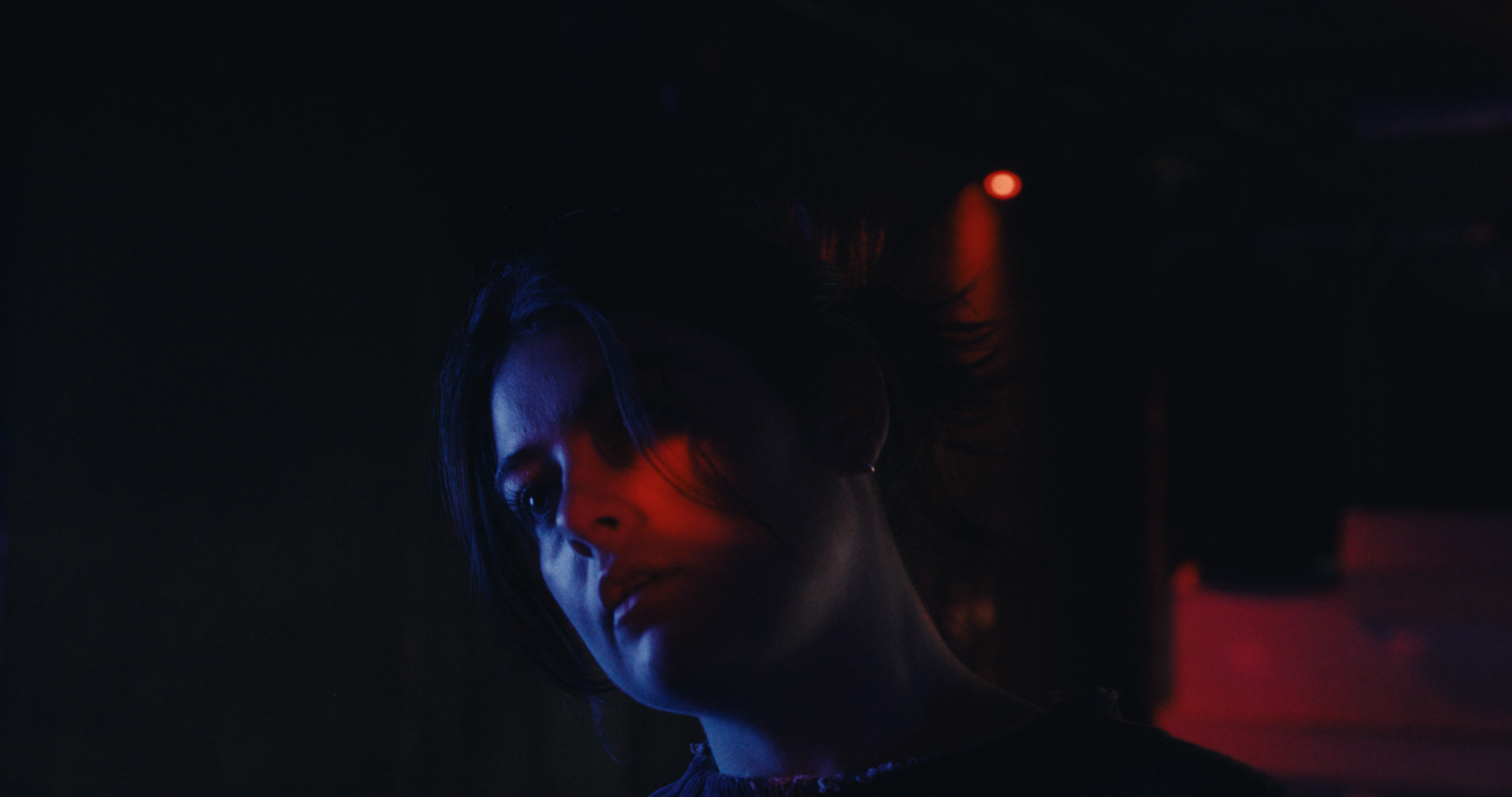
Writer, director and dramaturg Cesca Echlin stops by on Close-Up Culture to tell us more about her show Looking For Giants, which will show at the King’s Head Theatre from 14th – 26th January 2025.
First things first, in your own words, what is Looking For Giants about?
Looking For Giants is about one young woman and her relationship with three different men at three different stages of her early adulthood – one her university tutor, one a man she interacts with on a dating app, and one a fellow student at her school. In the young woman’s mind each man becomes an important character in the story she tells herself about her life so far. They act as mirrors through which she can work out who it is that she is. Looking for Giants is a play about attraction and the confrontation between self and other. It is about sexuality, and specifically about how we can conceive of female sexuality in a world so dictated by the male gaze. It also deals with the themes of narrativity, subjectivity and the interwoven relationship between fantasy and reality.
Looking For Giants has to be a one-woman show because it’s all about the worlds we create inside our head as individuals. Our actor Abby McCann plays all the characters, which I hope speaks to how much our idea of others is largely the product of our own projections. We generate our idea of other people because we think about them mainly while we are alone. We recreate conversations we have had with them, or moments we have shared. It’s like memories, which change each time we remember them.
How did you come up with the title?
I decided to write a prologue for the play, because I had written three separate parts and I needed something to tie them together. I wrote about the ‘seemingly random figures’ who play an important part of your mental landscape, even though they might have sprung out of small interactions you’ve had, or arisen in specific phases of your life that means the relationships are more isolated and intense. Without actually using the word giant in the prologue, I talked about how these people became ‘huge’ because we ‘puff them up like balloons’, and wanted to convey the sense that these figures could be overwhelming but that we played a part in them being with us. And when I was trying to tie all the strands together in the form of a title, this metaphor stuck with me. The sense we were looking for these people to join us in our fantasy realm, even though we had to turn them into something hyperbolic and – forgive the pun – heightened.

What was the writing process for this like?
Looking for Giants was the first play I wrote and to be honest it was a bit of a blur. The first part of the play, which is set at a university, came out of a short story I had written. A lot of the play started as prose, actually. I think you can detect that in the production – the central character is the ‘narrator’ of the story of her life. She is telling us a story that she has worked hard to tell well. She is convincing the audience and herself of things, trying to establish truths despite the slipperiness of the interactions she recounts.
The way I write is very instinctive. Actually it often feels like it comes from outside of myself – I will hear a line out of nowhere or see an image, or feel a character’s presence almost like a ghost walking alongside me. That sounds quite pretentious, but it’s only because it’s hard to put my finger on. It all feels very much out of my hands. But I know that if I force anything or think too hard about it, the emotional core of the writing isn’t there. I like to bring a sense of discipline or order after the initial impulse/outpouring.
‘Looking for Giants’ is semi-autobiographical. Writing about things that happen to you and the people you interact with is, perhaps, a tricky business, but I find personal experience is the subject matter about which I can write the most authentically.
What is the most interesting thing you learnt in the process of writing this show and taking it to Edinburgh?
I think it was learning the singularity of my creative collaboration with Abby McCann, the performer and dramaturg of the show. We had worked together before, and were living together when I asked her to take on the role. We still live together now. But going through the process with her, working as a duo, it felt quite surreal the ease with which we work together. A huge part of it is that we have the same kind of taste, in terms of the culture we like, and what we think is most important about the crafts of writing and acting. But I think we work so well together because of a deep acceptance of each other, which I guess comes from our friendship. So yes, I would say the discovery of Abby and I’s working relationship, and the profundity of it, is what struck me most about the process.
How did you find Edinburgh Fringe?
We were so happy about how audiences connected with, and related to, Looking for Giants. We also received great critical feedback in Edinburgh, which I’ve never experienced before. It’s hard to pretend that that kind of validation doesn’t bolster you (whether it be validation from audiences or critics), because it does. It feels affirming when people understand what you’re throwing out there. In general, though, the Fringe is hectic. It brings up a lot of different emotions in me, since I have been attending the Fringe every year since I was 15. I have had a lot of memories, good and bad, during those times so it has always been a loaded place for me. What I realised when we were doing this show at the Fringe in 2023 was just how much it felt like doing a job. I think people big up the Fringe experience as the time of your life, but you have to be disciplined, like with any other job. You have to establish a routine and try and look after yourself, if you’re going to get the best out of it. It sounds boring, but it’s true.

What sets Looking For Giants apart from the crowd, and why should people come see it?
Looking for Giants is specific in that it depicts a very particular but common cycle that many of us go through. This involves the fixation on an individual and the dynamic you have developed, the subsequent projection onto this person, and the wish to remain within these projections and fantasies instead of the real world, in which relationships are actually often clunky and unromantic. I think a lot of people can relate to that cycle. But whether giving into this fantasy world is empowering or tragic, it’s hard to say. I think both. The feedback that delighted me most in regard to this play was that people said the script had put into words those feelings or experiences that are very hard to pin down, or too complicated to decipher. For me, the most important part of making work is that people feel seen, because I think that is what art is about.
What’s next for you?
Honestly, I’m not sure. I want to adapt Looking for Giants for screen, as I have some fairly clear ideas about it. I am working on a long-term fiction project, although I suspect that will take some time. Staging a run of Looking for Giants at the King’s Head has taken a lot of work and forces me to wear a more practical, strategic hat. I think I need to return back to my spontaneous writer self in order to work out exactly which potential projects will take off.
And where can people follow your upcoming work?
I am on socials as @cescaechlin and my production company That What’s Wild is on socials as @thatwhatswild.
Looking For Giants is on from 14th – 26th January 2025 at the King’s Head Theatre.
You can buy tickets from https://kingsheadtheatre.com/whats-on/looking-for-giants



Leave a Reply