
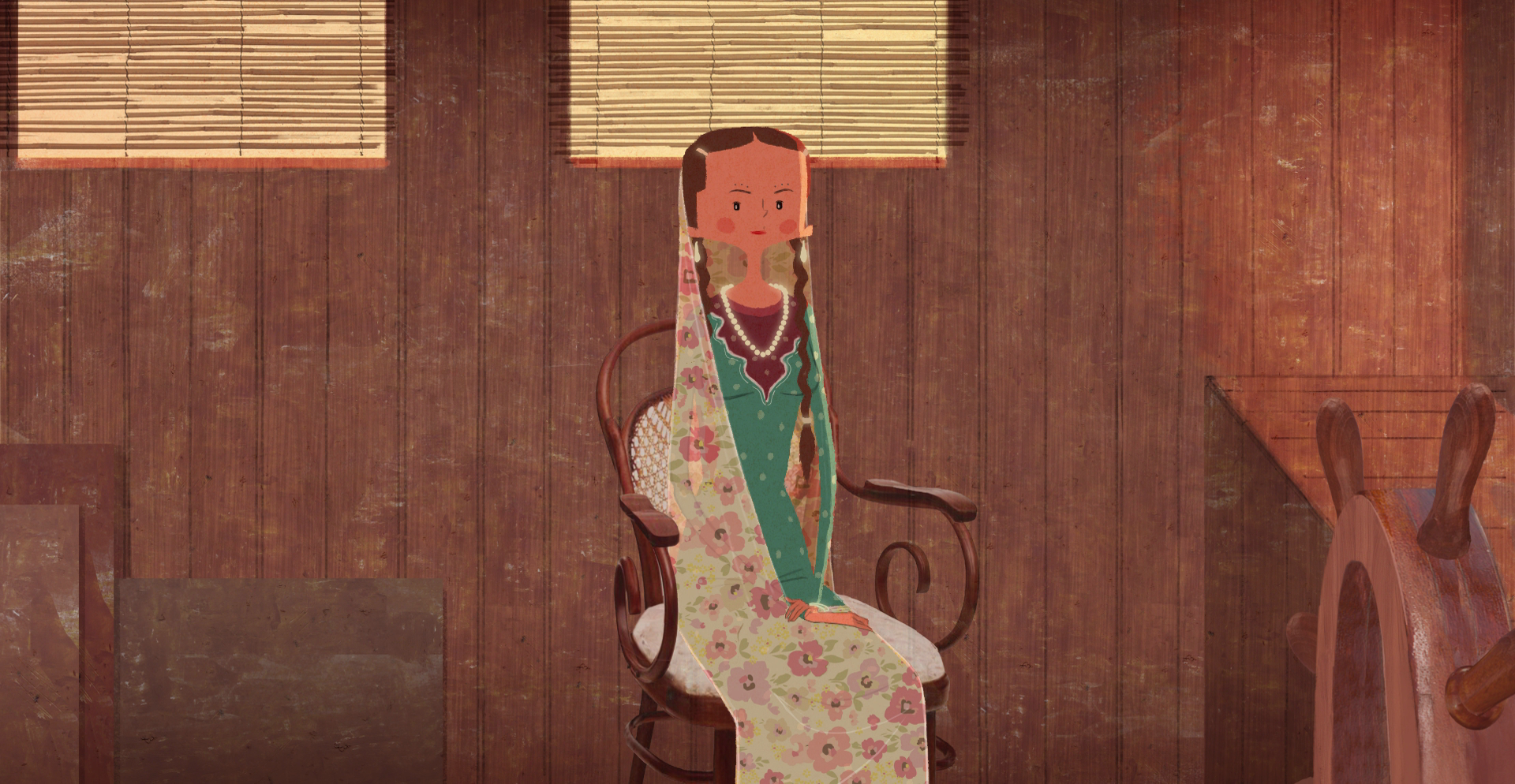
Writer/director duo Hossein Molayemi and Shirin Sohani’s In The Shadow Of The Cypress follows the story of a former captain suffering with PTSD living by the sea with his daughter, just when the captains past begins to consume his present a whale gets stuck on the beach shore which triggers and heals them both in the most peculiar way.
Hossein and Shirin join us on Close-Up Culture to tell us more…
What inspired IN THE SHADOW OF THE CYPRESS?
Actually, our personal life experiences, such as Shirin’s father’s experience as a war veteran and the challenging relationship between Hossein and his father, as well as the lives of PTSD veterans of the Iran-Iraq war, were the most important sources of inspiration for us in making this film. Other than that, our shared concerns about family and parent-children relationships also played a role in creating this story.
The film deals with heavy themes of trauma and healing. How did you approach balancing the emotional weight of these topics with the delicate nature of animation as a storytelling medium?
Since this balance has not been created one hundred percent consciously, it is quite hard to answer how we created it exactly. Both of us have been experiencing illustration, painting & Graphic design since our teenage hood when we used to study at art high school. We continued these experiences while studying for our B.A. and M.A. degrees at art university. So we were totally aware of the power and potentials of illustrated images for narrating a variety of stories. The delicacy of animation is a true fact, but it does not necessarily mean that only fairy tales or funny stories are appropriate for this medium. Animation is capable of being used for a variety of themes, spanning from emotional or adult contents to the funny products meant for children.

Animation can be such a powerful way to express complex emotions visually. How did you decide on the visual style of the film, and what were some of the challenges in bringing this story to life in animation?
We put a lot of time into doing some R&D about the visual style of the film; we wanted it to be minimal, expressive, original, and with the taste of local geographic elements. Since the film has no dialogue, it was very challenging for us to narrate this complicated story and also to make the silence between the father and the daughter seem real and convincing for the audience. For example, we used some fictional and imaginary elements such as the father turning into some flying bunches of petals, the girl melting like a candle, and the father breaking down into pieces in order to express the inner state of the characters.
The score by Afshin Azizi complements the film so beautifully. How involved were you in the music process, and what role did you want the score to play in the emotional arc of the film?
He is a very talented and bright artist. Although it was his first experience in the field of animation (he works mostly on live-action and documentary feature films), he was the one that we really needed on board. In general, we are very grateful for getting to know Afshin in the course of making “In the Shadow of the Cypress”. Actually, like the visuals of the film, we wanted the music to be as minimal as possible.
We provided Afshin with some good examples of film music to convey precisely what we expected. While we were writing for the film, we faced some difficult parts which might be easily solved by the help of music; but we knew that this is a wrong approach and film music is not supposed to compensate for the script holes and dramatic flaws. Music should not stand out of the film and attract too much attention. It must remain a part of the film. Fortunately, our several three-person sessions for discussing over the music and also our trust to Afshin’s talent finally paid off.

The film has been very well received at major film festivals, including Venice and Tribeca, and has been Oscar-qualified. What has the reception been like for you, and how has it affected your view of the film and its impact?
Despite the fact that we didn’t have any distribution company who support us in the festival circuit and we had to distribute the film ourselves, we are very happy and satisfied with the journey of the film around the world. The film had its world premiere at Venice film festival and also has been chosen as the best of Annecy festival 2024. It has won many national and international awards so far, including four Oscar-qualifying awards from Tribeca, LA shorts, Animayo and Spark animation.
To be frank, as we finished the film, we couldn’t exactly predict what would happen for it; but we were sure that it would get some good feedbacks and complements. Needless to say that some feedbacks and complements from prominent individuals in the world of animation, are as precious as some festival prizes, like the surprising comments we received from the legendary John Musker who praised our film as the head of the jury at Animayo animation festival. Hopefully, we have received many other complements and kind words from other reputable artists like Pete Doctor, Tom Moore, Joanna Quinn and so on.
The film’s journey has been fantastic so far, but to be honest, it hasn’t changed our view of the film; as we told you before, we already guessed that the film would be successful in the film festivals. However these good receptions and complements can put the spotlight on the film and can draw attentions of other film festivals, international media and audience toward the film.
We hope that this will help our film, not to lose its chances for the next steps.


Leave a Reply