
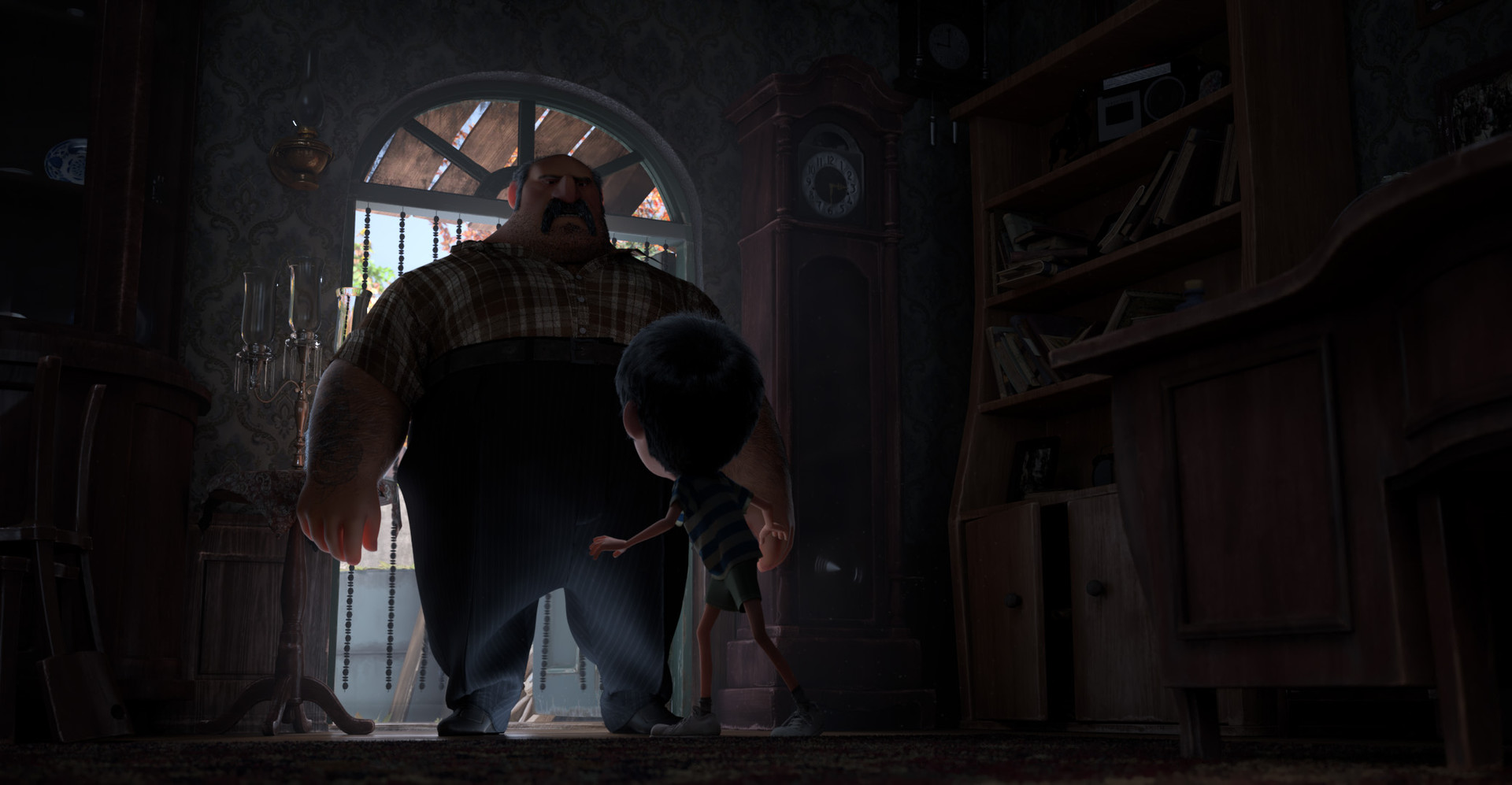
Tomorrow, the Oscar-qualifying animated short by director, writer, and animator Aryasb Feiz, and produced by BadStache Animation Studio and Rising Tides Films, tells a touching and inspirational story of resilience, friendship, and survival.
Set in the vibrant yet tricky streets of 1970s Shiraz, Iran, Tomorrow follows the journey of a 10-year-old urchin as he navigates the harsh realities of daily life. Amidst countless obstacles at home and his rough neighborhood, the plucky young boy forms an unlikely bond with a stray dog, a friendship that forever changes both their lives.
We spoke to Aryasb to find out more…
Can you share what inspired the creation of Tomorrow?
The inspiration behind Tomorrow came from my lifelong fascination with moral dilemmas. In school, questions like “What would you do if you found a bag of money but had a sick family member who needed it?” left a lasting impression on me.
The story’s core emerged from a colleague whose son needed life-saving medication he could only obtain illegally. This forced him to navigate the shady streets of Tehran, raising questions about the line between morality and law and how far we’d go for loved ones.
My passion for thrillers shaped Tomorrow into a suspenseful tale set in Iran, blending ethical complexity with tension to encourage viewers to reflect on their values.
What challenges did you face when adapting the historical and cultural setting of 1970s Shiraz into an animated world?
Adapting the historical and cultural setting of 1970s Shiraz into an animated world was an exciting but challenging task. We had to dive deep into research to ensure that the setting was both accurate and respectful of the time period. However, beyond just recreating historical accuracy, we needed to find ways to make the environment serve the story. This meant balancing authenticity with storytelling, ensuring that the locations, atmosphere, and overall aesthetic enhanced the emotional beats of the film.
One of the key challenges our art directors faced was making the world visually appealing without it feeling overly idealized or “pretty.” Shiraz in the 1970s, like many cities at the time, had a rawness and grit to it that needed to be reflected in the animation. This was a fine line to walk—keeping the essence of the city while not letting the visuals distract from the emotional core of the story.

How did the animation style evolve during production? Were there any specific visual techniques you used to emphasize the emotional beats of the story?
I wanted the film’s style to feel familiar yet distinct, with a mainstream CG approach to challenge audience expectations. Given the story’s darker tone, this style served as an effective contrast to its mature themes. I’ve long admired Mehdi Alibeygi’s character designs, so after finishing the script, we used his influence to create expressive, yet simple characters.
For the sets, I aimed for a realistic but not too much, ensuring the characters didn’t feel out of place. The more realistic and vast environments serve to visually reinforce that this is a harsh world, not meant for a child, and throughout the film, the boy is seen reaching for things that feel just out of his grasp, emphasizing his sense of displacement.

Was there a particular moment in the production of Tomorrow—either during development, animation, or editing—that was especially meaningful to you?
Every moment of the eight years spent making Tomorrow was meaningful. During this time, I got married, made lifelong friendships at work, and lost them due to immigration. I also created Mr. Indifferent, which unexpectedly went viral. Throughout political and social turbulence in Iran, we kept pushing forward. The journey was filled with loss, hope, resilience, and love, and finishing the film after all these years felt like a reflection of everything we went through.
For international audiences unfamiliar with Iran in the 1970s, what do you hope they understand about that era from watching the film?
I didn’t want the film to focus too heavily on the specific time and place. While there are elements of the 1970s in the backgrounds and characters, the core of the story is about all children whose childhoods are stolen by politics, ideologies, and poverty. I hope the film encourages the audience to reflect more deeply on the lives of children, especially those who grow up in difficult circumstances.





Leave a Reply