
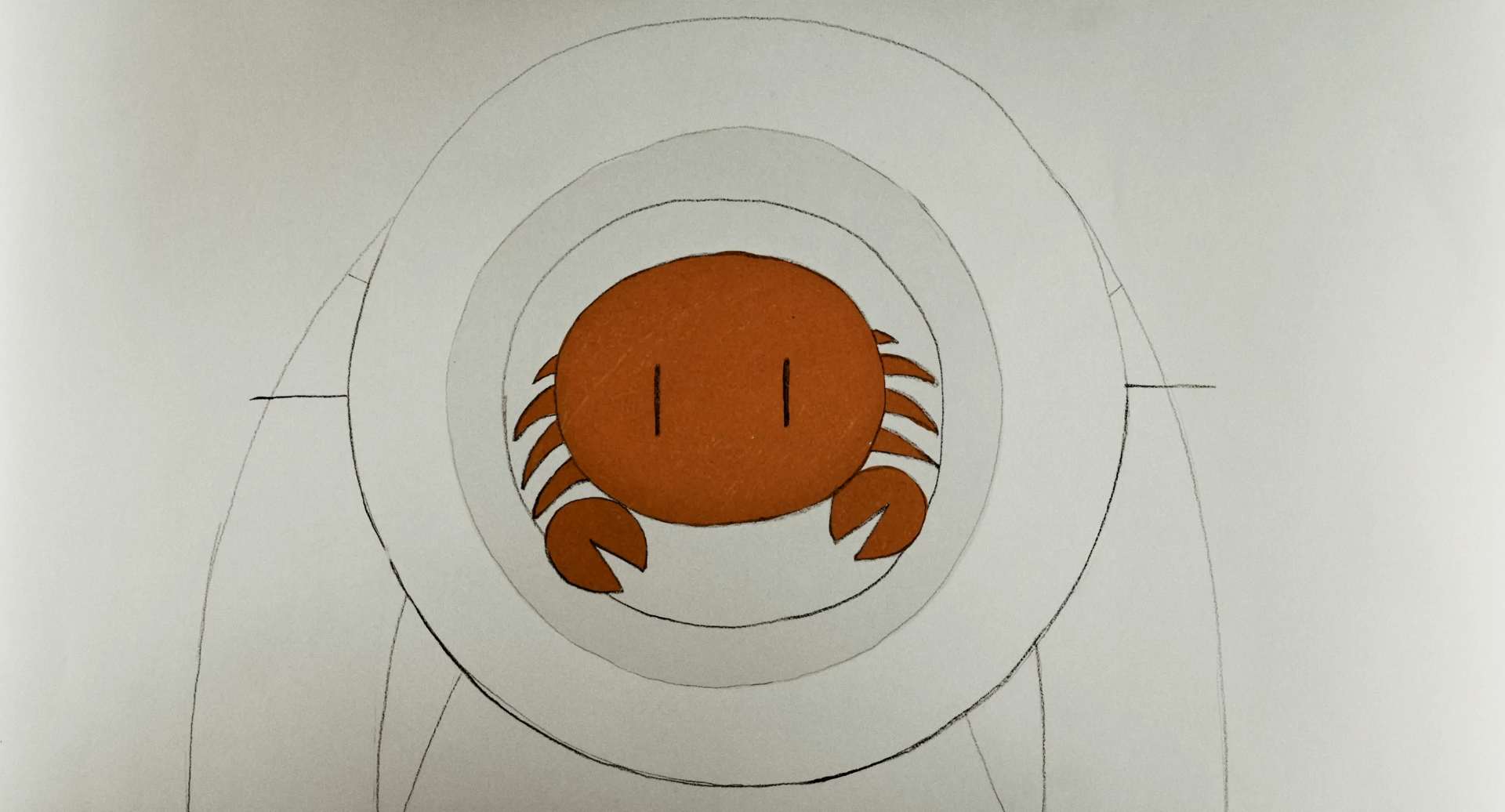
Writer Aleksandra Sykulak and producer Bart Stanislawek join us on Close-Up Culture to talk about Crab Day. The BAFTA nominated short film follows a young boy who – as part of a fishing community’s annual ritual – must kill his first crab in order to become a man and gain his father’s approval.
Firstly, huge congratulations on being nominated for a 2024 BAFTA, what was it like finding out you had made it onto the list of nominees?
Aleks: Thank you so much! It was a pretty surreal experience. To be honest, I still catch myself forgetting about it and then I suddenly remember and it makes me feel really grateful that we all met at school and managed to make this film together.
Bart: Thank you! It was insane and the whole team rejoiced. I truly believe it’s a testament to the incredible work everyone has put into the film, as everyone who’s worked on it brought something truly personal. It’s brilliant to get this platform so that more people are able to see the film and hear its message.
How did the idea of the film develop? And what was the brainstorming process for the plot, and the name?
Aleks: The heart of the idea, which later became Crab Day, was born during the first weeks of film school when animation directors and writers got paired up to do a kind of a warm up exercise. A lot of it was still on Zoom because of the rules around lockdown. We had to take a virtual tour of Tate Britain and each of us would pick a few paintings that struck a chord with us somehow. Later we would chat about them and pitch a short story based on these images.
Funnily, both me and Ross came back with very similar paintings of sleepy seaside towns and sea creatures. I remember the main ones were “The Crab” by Oskar Kokoschka and “August Blue” by Henry Scott Tuke, which depicts a group of boys bathing around a harbour. Ross grew up in Great Yarmouth and we always knew we wanted to set the story by the sea. Also, this image of a massive crab monster was something that we really wanted to make into the film. The real development began when we started our discussions on what this crab actually represents. We were both quite naturally drawn to themes revolving around rights of passage and sensitivity within masculinity, but it was important to us to approach it from a different angle, a perspective of an outsider. We took on a point of view of a boy who has this special, sensitive part of himself that he refuses to kill (quite literally).
The development process from the first animatic, which was around five minutes long to the finished film took more than a year. The struggle was not to overcomplicate it, to keep it simple and to carry the emotion until the end. We managed to stay on track thanks to many NFTS tutors, with whom we had countless conversations regarding the story and who’ve been an incredible support throughout.
Bart: Ross and Aleks had already given birth to the idea when they brought a five-minute for me to have a watch to see if I had any interest at all. I watched it, related strongly to what it was saying, had a little cry, and immediately knew I wanted to be a part of making this film happen. The overall shape never strayed far from that original idea, though some elements were developed and grew as we dug into the characters and established the rules of the world. The trick was to find complexity yet keep a lightness of touch, and every moment within the film has countless hours of discussion behind it.

There’s no dialogue throughout, was it difficult to navigate telling a story like this with no words?
Aleks: In a lot of ways it was much easier. It was quite clear for us from the beginning that it would be a film with no dialogue. Without words we could concentrate only on the emotions and the little gestures guiding the audience through the story. Something that is wonderful is that Crab Day seems to be appreciated by a lot of younger audiences, which to a degree is also possible due to the fact there is no dialogue and kids can connect with it on a more instinctual level.
Bart: Film is a visual medium and animation only heightens that aspect. What Ross does so incredibly well is use really simple lines and specific movements within the action to communicate emotion and plot with utmost clarity. He’s able to create a wonderful world, and leave enough space for us as an audience to project our own experiences into it, which I think is a strength of not using dialogue within this film. I’ve spoken with a lot of people who saw the film and related to being an outsider – and there’s so many ways to feel like one.
What led to the decision to use animation over live action?
Bart: This was always going to be an animated film, and from a production standpoint I’ll just say I’m thankful we were able to pull off a huge battle on an island with an oversized crab using paper, pencil, and paint!
Do you have any other projects or ideas lined up?
Aleks: Apart from our own projects, we are actually developing Crab Day into a series for kids. We would love to play around more with the world of the Crab Island and the characters, maybe introduce some new ones, and create a show where kids can learn cool stuff about nature and the world that surrounds them. Personally, I’m also very much into adult animation. I’m currently developing an animated show about a family of dinosaurs that melted from ice and need to assimilate into contemporary human society and a show called Fatberg – about a lady rat, who’s a therapist in a city in the sewers of London.
Bart: We’re currently working on an extension of the Crab Day story, and it’s been really exciting playing around with the possibilities of that world. Outside of that I’ve been developing several projects, both animated and live-action.
What was it like working with one another on this project?
Aleks: Working with Ross on the story was a real pleasure. We hit it off quickly thanks to similar sensitivities, also we always knew what we wanted to get out of that film, the emotional arch that we were going for. The rest was just refining it through many long chats, which often would not only be about the story itself, but also our lives, our parents, places we grew up in. I loved having Bart on board, he is fantastic in development and was always asking all the right questions.
Bart: It’s been a joy all the way through. Both Ross and Aleks bring so much imagination, openness, and compassion, both within the work itself as well as to how they relate to the people they work with. Everything’s a creative puzzle, and it’s an approach filled with joy and care that brings the best out in the people around them.
Where can people follow your work?
Aleksandra Sykulak – www.aleksandrasykulak.com and @syki_aleksandra
Bart Stanislawek – www.bartstan.com and @bartysuavek
Leave a Reply