
That’s actually a far more difficult question than it appears to be.
It’s one that probably wouldn’t have occurred to me had it not been for a rather lovely little ritual my partner and I developed while sharing a bedsit in London. We watched films almost every night, with a projector pointed at the bedroom wall, transforming our cramped, Charlie Bucket-esque living space into our own little cinema.
I was usually entrusted with choosing the film. As the founder of Close-Up Culture, I like to think I’d earned that responsibility through years of blood, sweat and strained cinema eyes. My choices tended towards the classics and critics’ favourites: Rear Window, Dr. Strangelove and The Big Lebowski, to name a few. But every now and then, my partner, whose film instincts are as sharp as anyone’s, took the reins. One of her choices was Ella Enchanted – a rather different proposition from the films I’d been choosing. Yet it left me thinking about something I’ve since found rather difficult to shake.
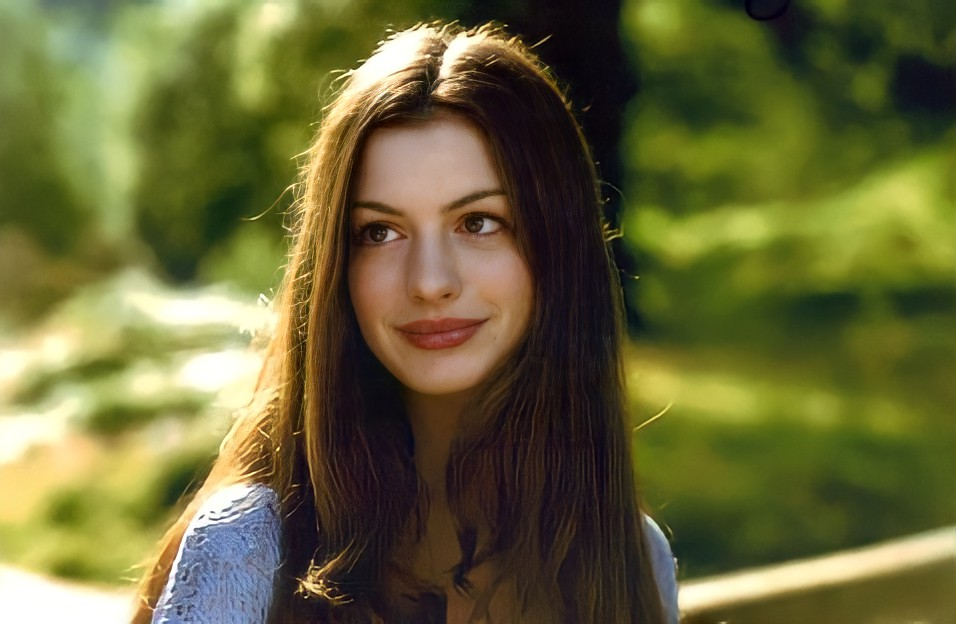
You won’t find Ella Enchanted among the films celebrated in Sight and Sound’s greatest-films poll. But there’s something about it that feels almost impossible to improve upon. It’s a fairy-tale romantic comedy starring a young Anne Hathaway as a cursed heroine, alongside Hugh Dancy’s disarmingly sincere prince and Lucy Punch’s gloriously obnoxious Hattie.
The film is funny, romantic and bursting with life. Its storybook world has a playful modern sensibility without losing its affection for the fairy tales that inspired it. Most importantly, it knows exactly what it wants to be. It embraces its silliness and wears its sentiment on its sleeve, never feeling the need to be anything else. And it delivers on that promise beautifully.
That, to me at least, is a more interesting measure of cinematic achievement than we sometimes give it credit for: a film that understands its own identity so completely, and realises it so successfully, that the whole experience feels almost magical.
If Ella Enchanted makes a convincing case for this particular kind of magic, Shrek 2 might even take it to another level. A sequel could easily have buckled under the weight of its predecessor, but this one finds fresh comic possibilities in expanding the fairy-tale world. Puss in Boots, with those adorable eyes and the voice of Zorro, the gloriously over-the-top Fairy Godmother and the celebrity-obsessed kingdom of Far Far Away give the film plenty to play with. Beneath all the irreverence lies a surprisingly heartfelt story about self-acceptance. And its climax, set to Bonnie Tyler’s Holding Out for a Hero, is an absolute triumph. It too is silly, sharp and wonderfully imaginative, but never loses sight of what makes it work.
Then there’s School of Rock. Jack Black is in his element, yet the film works because it’s far more than a vehicle for his high-voltage, man-child charisma. Its music, comedy and heart feed into one another, turning a silly premise into something genuinely magnetic. More recently, KPop Demon Hunters pulled off a similarly bonkers balancing act. Its fictional girl group, HUNTR/X, are chart-topping pop stars by day and demon hunters by night – an absurd mash-up the film treats with total conviction. The songs don’t merely sit on the soundtrack; they reveal character, propel the plot and double as action set-pieces. Combine that with dazzling animation and relentless momentum, and you get a film where every note lands on a wildly satisfying beat.
And this isn’t just about family entertainment or animated adventures. Anna Biller’s The Love Witch is a sumptuous, Technicolor-inspired tale of witchcraft and romantic obsession. Its elaborate costumes, production design and Samantha Robinson’s deliberately theatrical performance are impossible to miss. Yet nothing feels out of place. Its artifice is the point, and the film commits to it so completely that its artificial world becomes utterly convincing.

The magic doesn’t always require technical perfection, either. Take Heston, Ella Enchanted’s CGI snake, voiced by Steve Coogan. The effects haven’t aged particularly well, yet he’s oddly endearing. He fits right into the film’s whimsical, slightly ridiculous world.
Compare that with Scorsese’s The Irishman. Its digital de-ageing can draw attention to the technology, creating a distance between the viewer and the world of the film. Heston’s ropey CGI adds to the charm; the artificiality in The Irishman occasionally breaks the spell. Sometimes imperfections are part of what makes a film special. What matters is whether they enrich the experience or interrupt it.
Of course, knowing what you are doesn’t guarantee you’ll pull it off. Jupiter Ascending has an enormous imagination and no shortage of ideas (cc: Channing Tatum as a half-man, half-dog wearing gravity-defying boots), but its competing tones and narrative ambitions struggle to form a convincing whole. Cats, on the other paw, commits wholeheartedly to a rancid, nightmare-inducing vision, made all the more horrifying by the presence of James Corden. Commitment is important, but the elements still need to come together. A film has to make us believe in its world, however peculiar that world might be.

The older I get, the more I appreciate films that know exactly what they are, do it brilliantly and leave me with that deeply satisfying feeling of having spent my time well. I still love films that challenge, surprise and push boundaries, but not every film needs to reinvent cinema or make a grand statement. Sometimes I just want a wonderful story, characters I care about and a world I don’t want to leave. Something my mum was trying to tell me through my childhood with her endless viewings of Legally Blonde and Miss Congeniality.
And I like to think we – yes, I’m dragging you into this too – have matured as a film audience enough to appreciate that these things can be just as rewarding. We can recognise the nostalgia running through our affection for a film without dismissing it as the only reason we love it. We can acknowledge a film’s imperfections and still recognise something extraordinary in what it achieves.
I’ve started thinking of it as Cinechantment.
Cinechantment /ˌsɪnɪˈtʃɑːntmənt/ noun
The magic that happens when a film understands exactly what it wants to be and brings that vision to life so completely that it casts an irresistible spell.
That’s the greatest compliment we can pay a film: not that it’s the cleverest, grandest or most important, but that it feels utterly, unmistakably itself – and leaves us wanting to return to its world time and time again.
So, is Ella Enchanted the best film of all time? Maybe. Not because it needs to compete with every other film ever made, but because it captures something ineffable about cinema that deserves far more appreciation.

Leave a Reply