
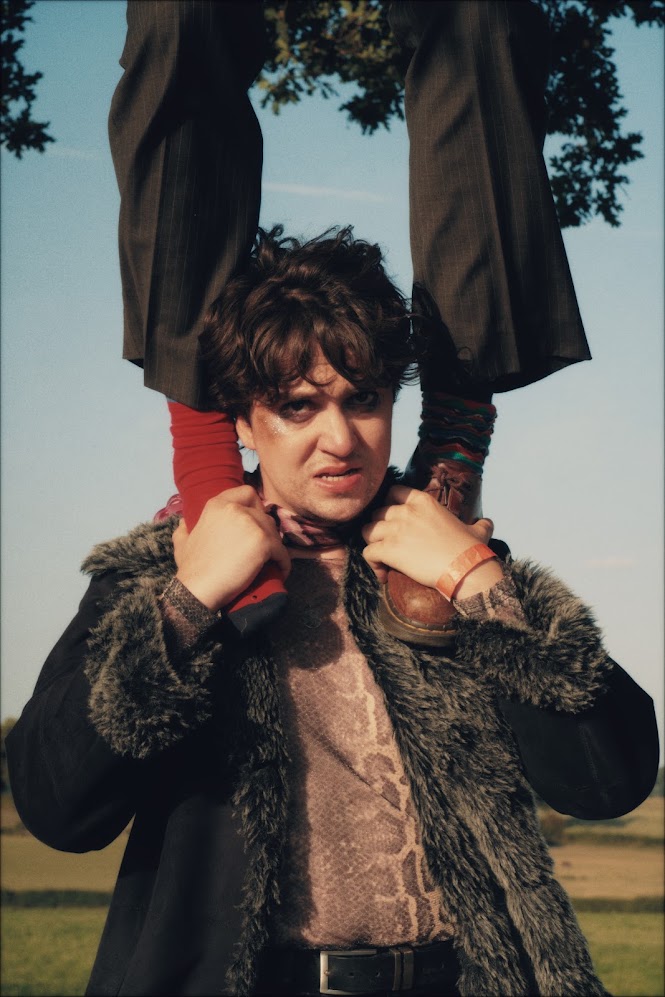
Ben Bovington-Key’s BFI NETWORK short film The Easy Way Out is described as a film for those who leave us and the ones left behind. It is a beautiful and heartbreaking work that examines the choices we make and the consequences that follow. We spoke with Ben about the inspiration behind the film, the creative process of bringing the story to the screen, and what he hopes audiences will take away from it.
Where did the idea for The Easy Way Out first come from, and why did you want to make this film?
A few years ago we lost my brother. It was very sudden and unexpected and kind of blew up me and my family’s world for a long time. There’s no roadmap for how to deal with something like this so I think I was scrambling for ways to cope and understand it for a while. One of which was taking my brother’s ashes to the Ganges in India with my Nan which will probably require another story at some point. But even after that I felt there were still things unsaid between my brother and I that I couldn’t get out of my head. So, one day I ended up scribbling them down on a pad of paper and for some reason I ended up imagining his replies to my jabs and questions. But none of them were providing any answers. That’s where the premise for the film emerged.
The title The Easy Way Out is quite provocative, particularly given the subject matter. What does the title mean to you, and what did you hope audiences would take away from it?
The title is something I dwelled on for quite some time. The film sits in a strange place tonally between drama and comedy, sincerity and levity. To try and capture that in the title wasn’t a simple task and so I decided to focus more on the root of the discussion being had. I think the reason why the title worked for me was because it represents the guttural reaction some people have to the act of taking your own life from an outsider perspective and the stigma that surrounds it. It’s an aggressive term for an aggressive act. It implies cowardice or even laziness. It’s the reaction that Ted has when he finds Jim and perhaps one I had for my brother. One of “how could you do this to us”. As though I were the real victim. Yes, the title is provocative but the goal of the film is to then unravel the myth of that statement. It couldn’t be further from the truth. It’s not easy for anyone. Most importantly the person at the centre of it. The statement frames the act as a convenience rather than the last conceivable resort to someone’s suffering. It is boiled down in a retort from Jim in the film “Well clearly it’s not that easy is it”, which is a gag in many ways, but it really tells the whole story of what has brought them both to this point.
The film emphasises on conversation as a means of connection. Do you see the film as making an argument for simply being willing to have difficult conversations, even when we don’t necessarily know what to say?
I think that’s exactly the point. In many ways I wish I practiced more in what I preach in this film. It’s so much easier to float on the surface of a conversation than to dig deeper. It’s hard to pry into someone’s life over a pint, even if you’re detecting something is off balance. I still struggle with it. Keeping in touch with everyone, checking in, asking the real questions.
Perhaps what I’m trying to say is we need to make serious conversations less serious. There is so much weight on the conversation of our mental state that bringing it up feels like it’s going to inconvenience everyone around you and sour the vibe. But what if we could speak about it more candidly? What if we could take the piss a bit? The key to allowing anyone to accept a hardship or grievance in my friend group is when it becomes the butt of the joke. By no means am I saying we should mock these problems. It should come hand in hand with love and support. But sometimes levity can allow for more freedom to express yourself and with that comes acceptance. It’s only once we accept there is a problem that we can fix it.

Despite its heavy subject matter, the film incorporates a lot of dark humour. How did you approach finding that balance without undermining the seriousness of what the characters are experiencing?
In many ways the tone of this film stems from the conversations and coping mechanisms between myself and my family in the aftermath of our own loss. The times were dark, but you have to laugh eventually. We were angry, confused and grieving and so our humour was about just that. Taking the piss got us through it all.
My approach to this in the film was never to mock the subject matter or make a joke of a mental health crisis (as many films about suicide do, I might add). The point was to present the reality of the distress in a situation like this, but to be going through it with a character who is desperately trying to maintain this facade of stability by trying to make a joke of it all. He’s embarrassed and just wants to make his brother smile.
There is a trope in films and in life that when someone dies they suddenly become an angelic being that did no wrong and spoke no evil while they were alive. Obituaries often relay that people were kind and thoughtful and liked by everyone in the village. I’m sure this is true. But they also probably made fart jokes, picked on their little brothers and perhaps even smoked a cig behind the bike shed.
Do you think humour can sometimes provide a more accessible way of approaching subjects that audiences might otherwise find uncomfortable or difficult to engage with?
Definitely. Much like what I mentioned earlier, if we can use levity in conversations with our friends and family to approach difficult subject matters then I feel in theory this should apply to audiences too. Personally, I feel all stories should have moments of light among the darkness. If you try to drag me to see a drama that promises to be relentlessly authentic and bleak from start to finish then I’d say that isn’t authentic at all, at least not to my experience. Not only that but you’re probably going to dissuade a large audience who also just might want to be entertained for their hard-earned cash.
However, if you can make people laugh while delivering a sincere message then hopefully that broadens the scope of your audience and makes the pill less bitter to swallow.
That being said, the truth is that so far this film has had a much tougher time reaching festival audiences than my previous films. There could be many reasons for this, but a concern about upsetting audiences was raised to me by a festival director. If you ask me, I think audiences like to be challenged and made to feel a bit uncomfortable at times. That’s the thrill of it all. The film does have an element of risk about it, but I hope more programmers will take a chance on it. And if there are complaints, let them come to me, at least we’ll be having a conversation about it.

The film also incorporates glimpses of the brothers’ childhoods. How important was it to establish their shared history, and what did those memories reveal about their relationship in the present?
They were really important to me personally. Honestly, I think there is a version of this film without them which would have worked just as well. But it deepened the narrative for me and gave me an opportunity to include some reflections from my own relationship with my brother. The purpose really was to not just show Jim’s character on his darkest day but instead depict someone who is and was full of life and lived it unapologetically. Taking your life can be seen as such a statement that it can define a person’s story and I didn’t want to be the only element of this character you see on screen, they needed to be more than that. Someone who once inspired other people to live.
How much did the performances of Sam Swainsbury and Charlie Hiscock shape your understanding of Ted and Jim? Did either actor bring something unexpected to the characters?
Both actors brought a great deal to the characters that I couldn’t have prepared for. Writing comes from your own experience and so much of Jim and Ted was thoroughly rooted in myself and my brother. I actually realised the way I had imagined Jim in the script fell into some stigmatised views of someone who could be considered “down and out”. Covered in tattoos, punky attitude to life, rough around the edges. When we started to consider Sam it brought a whole new dimension to the film. Sam made Jim feel like a detailed, and specific character but simultaneously like he could be anyone’s big brother. He’s not some alien, other worldly individual, he’s someone we all know, which makes it all the more heartbreaking.
My understanding of Ted was a lot fuzzier. There was something very uncomfortable about having a character that stemmed from my own experiences, which meant I gradually started to push him further and further away from me. What the character needed was a confident performer to take ownership and mould him into something distinct from myself and three dimensional. I think Charlie’s performance in the film is remarkable because I can feel what he’s feeling, but I don’t see any of myself in Ted as a character, he’s made it his own, which is exactly what I needed.
The film deals with an experience that affects so many families, but which can be incredibly difficult to talk about. What conversations would you like to see audiences having after watching it?
I feel incredibly lucky that I have a family who I could talk to openly about what happened. Not that that was always easy. Feelings well up in waves and if a member of your family seems to be floating above the water for a while you don’t necessarily want to drag them down with you. But we all made sure we were there to listen and compare thoughts on how we were doing and how we felt about the situation, even if it was hard to hear.
Any conversation will be of benefit. It’s bottling it up that will eat away at you. And if you don’t have family you can speak to about it, seek out close trusted friends. Know that they may have experienced something similar and have never shared it. Since I’ve started speaking about this through the film I have learnt so much about so many people I thought I knew. Nearly everyone has been touched by this in some way.
And finally if you don’t want to speak to friends, know that there are strangers out there who want to speak with you too, through organisations like CALM, Andy’s Man Club and many more.
What do you hope someone who has lived experience surrounding suicide or bereavement might take away from watching The Easy Way Out?
The thing that struck me the hardest about dealing with a loss in this way was the feeling of anger I had towards the person I was grieving. Your loved one becomes a victim and their own murderer in a way and so you’re trying to come to terms with both of those feelings at once. For anyone out there also experiencing this, I’d like them to know that it’s normal and eventually those feelings of anger pass. I feel I’ve come to terms with the choice they made, but it doesn’t mean I agree with it and I think that’s also important. To allow yourself those nuances in your understanding of what happened. It’s not black and white.
Having now brought this project into the world, has the experience changed or shaped the kinds of stories you want to tell as a filmmaker?
I’ve been thinking about this a lot recently and I think undoubtedly it has. I’ve always felt like I understood the term ‘write what you know’ until I made this film. It is not about writing about a subject matter or a person and or time period you are familiar with, it’s about finding a truth from your experience that you want to explore through a story. That might sound obvious to some people but it had never really clicked for me.
I’ve found myself being a lot more picky with the ideas I pursue, particularly if I can’t find some kind of relatable truth in them. Whereas before, if something was fun and hooky and interesting, that would be enough. Maybe it’s just a phase, but this has been the most rewarding creative experience I’ve had and I want more and to go deeper. We have a couple of feature film projects in the works now and I think they both offer that opportunity, to go further, so I can’t wait.
The Easy Way Out is screening at AESTHETICA FILM FESTIVAL on November 6th, 2026, and CINECITY FILM FESTIVAL on November 11th, 2026.






Leave a Reply