
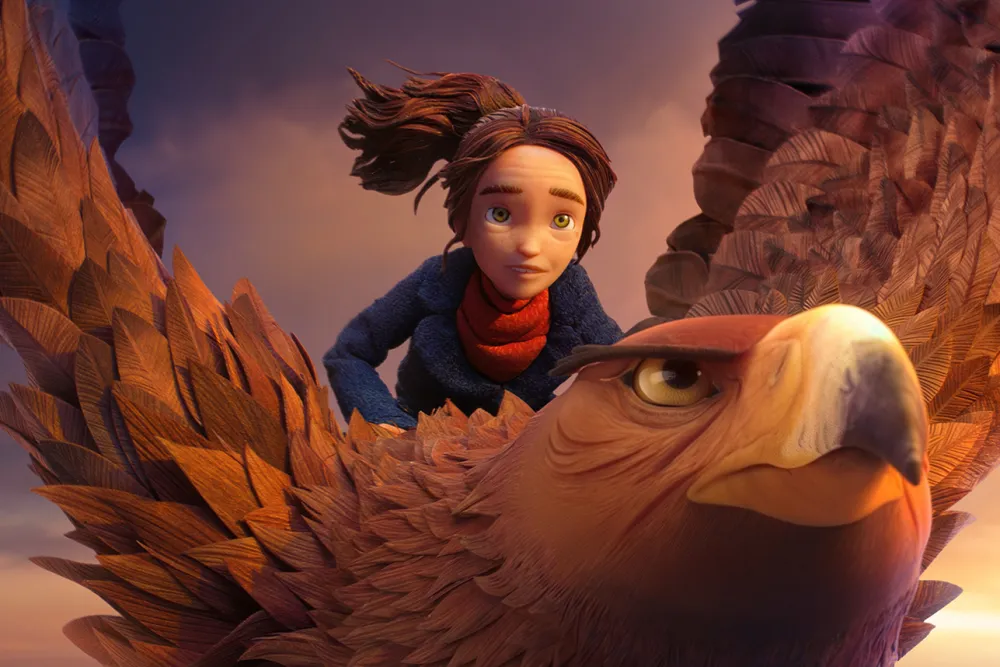

Stop-motion animation has a distinctive ability to make the fantastical feel physical. Every creature, landscape, and movement carries the suggestion of something painstakingly brought into existence by hand. LAIKA Studios’ latest stop-motion feature, Wildwood, is no exception. Directed by Travis Knight, Wildwood embraces the strange and the magnificent in equal measure in an extraordinary demonstration of the possibilities of animation.
The film follows Prue McKeel (Peyton Elizabeth Lee), whose life is upended when her baby brother is abducted by a flock of crows and carried into an enchanted forest on the outskirts of Portland, Oregon. Determined to bring him home, Prue ventures into the forbidden wilderness alongside her classmate Curtis (Jacob Tremblay). What awaits them is a world governed by unfamiliar rules, inhabited by talking animals and dangerous forces whose ambitions threaten the fragile balance of the forest. As their journey unfolds, Prue’s rescue mission becomes a confrontation of the complexities of grief, courage, and the responsibilities that come with growing up.
In an era in which animation is associated with the endless possibilities of CGI (and increasingly AI), Wildwood is a powerful reminder of the magic of stop-motion. Every environment possesses a physical weight, and every creature feels as though it has been carefully coaxed into existence. The forest is dense with detail, creating an environment that seems to extend far beyond the edges of the frame. There is an extraordinary sense of texture to the film, from the smallest movements of its characters to the intricacies of its sets.

It is a considerable achievement for a studio whose previous work, including Coraline and Kubo and the Two Strings, has already demonstrated an exceptional command of the form. Yet Wildwood feels particularly ambitious in its scale. Rather than relying solely on the intimate, carefully contained environments that can make stop-motion so effective, Knight opens an entire fantasy realm.
The film’s chase sequences are among its best moments. The pursuit of Prue and the General is particularly breathtaking. As the General surges through the forest, the sensation of speed is so convincingly realised that it becomes visceral; there were moments when my stomach dropped as though I were riding on the General’s back myself. It is a testament to the precision of the animation that the sequence feels less like watching a chase unfold than being swept up in it yourself. This same command of scale and movement carries into the almost thirty-minute-long climactic battle scene, where the choreography transforms the forest into a sprawling arena of conflict. The scene is visually spectacular and maintains its sense of danger, with the sheer number of moving parts contributing to an exhilarating sense of unpredictability.
Wildwood embraces the darker qualities of traditional fairytales throughout. This is not a sanitised adventure in which danger exists simply to provide a reassuring obstacle on the path towards a happy ending. The violence can be unexpected, sudden, and disturbing, while the film’s whimsical elements are undercut by a sense of genuine peril. Its eccentricity is matched by an unexpected severity, giving the story a welcome resistance to the conventions of contemporary family animation.
The voice cast lends personality beautifully to the collection of inhabitants that live within and beyond the woods. Lee gives Prue a convincing combination of determination and vulnerability, while Tremblay provides a perfectly appealing awkwardness to Curtis. Carey Mulligan brings an appropriately chilling quality to Alexandra, while Mahershala Ali adds gravitas to Brendan.

At over two hours, it is an expansive undertaking – the longest stop-motion animation ever created by runtime – and there are moments when the accumulation of characters and conflicts almost overwhelm Prue’s original quest. Nevertheless, any shortcomings feel minor beside the scale of the accomplishment. It is a testament to the patience, labour and artistic conviction required to create something so resolutely handmade. In a cinematic landscape increasingly shaped by technological efficiency, it is moving to see a film whose every frame bears the marks of human ingenuity.
Whether Wildwood can translate its considerable artistic achievement into box-office success is a less certain prospect. LAIKA’s commitment to the craft of stop-motion comes at a considerable financial cost, with Wildwood reportedly having a $100 million budget and taking 15 years to make. It faces additional challenges: its darker themes and PG-13 rating may limit its appeal to younger audiences. Nevertheless, reducing the film to its commercial prospects would be to overlook what makes LAIKA distinctive. Wildwood is a remarkable feat of craftsmanship, and its willingness to pursue an ambitious, distinctly individual vision is precisely what makes it so special. Whether audiences will turn out in sufficient numbers to justify that ambition remains to be seen; but what is abundantly clear is that Wildwood represents the kind of filmmaking the industry should be making room for.





Leave a Reply