

By Genevieve Dammery
Well, there certainly is a lot going on in the South Korean DMZ.
After a decade away from feature filmmaking, Na Hong-jinhas returned with Hope, a film that asks a simple question: what if Jaws, The Wailing, a UFO conspiracy podcast, and a particularly aggressive Korean village council meeting all happened at the same time? The answer is 156 minutes ofbewildering mayhem.
Set in an isolated village near South Korea’s demilitarised zone, Hope opens with a mutilated cow, a sleepy rural town and a group of increasingly alarmed locals. It all sounds relatively restrained. It is not. Following the gruesome cow discovery, Hope quickly turns into a police procedural, then a survival thriller, before taking a turn into science fiction, and eventually arriving at a destination that appears to have been reached by throwing every genre into a blender.
The premise appears simple: police chief Bum-seok(Hwang Jung-min) investigates a mysterious attack while local hunter Sung-ki (Zo In-sung) and his companions head into the mountains to find whatever is responsible. What follows, however, is anything but.

Na takes his time revealing exactly what is lurking beyond the trees. For the better part of the first hour, the monster isnot shown; it is glimpsed, heard and violently inferred. It is a familiar trick in the horror genre: the less we know, the more room there is for our imaginations to fill in the gaps. Butthen Hope shows us a creature so strange that its appearance raises significantly more questions than it answers. It is at this point that the film throws subtlety out of the window and hits the accelerator.
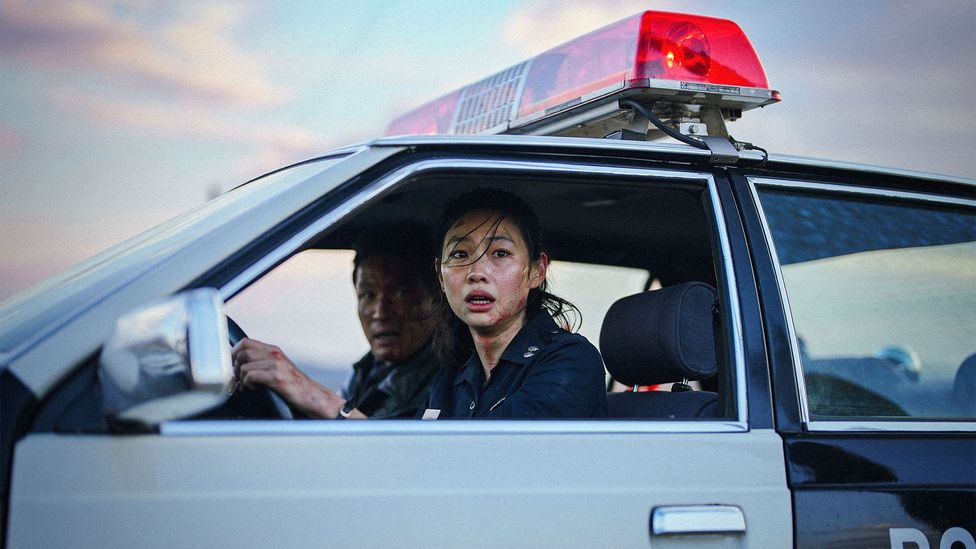
The action is ridiculous in the best possible sense: characters sprint, crash, shoot, and perform increasingly improbable feats of vehicular heroism, but there is something wonderfully funny about the film’s utter refusal to take the conventions of the action movie genre seriously. Na repeatedly sets up the familiar scenes of a heroic hunter, a fearless policeman and a lone warrior, only to then immediately undermine them.
It is also difficult to ignore the significance of setting this story beside the Korean DMZ. This is a community already accustomed to living alongside the possibility of violence, surveillance and conflict. When something genuinely unknown arrives, the residents respond with the tools they already have: guns, suspicion and an impressive willingness to assume the worst.
And then, to add to it all, Michael Fassbender, Alicia Vikander and Taylor Russell, arrive as alien figures, because apparently Na decided that a Korean monster movie needed an international cast of oddly attractive alienstoo. The shifts in tone do not always work. Hope moves from violence to slapstick comedy to melancholy with incredible speed. Its runtime is not modest, either. The film has enough plot for several movies and, by the final act, feels more like a set up for a sequel than anything else. There are a lot of questions that weren’t answered: how were the monsters at the start of the film related to the aliens at the end? Why do all of the aliens look so different to each other? Why are they on Earth in the first place?
Yet by the end, criticism feels beside the point. Hope is messy, excessive, deranged, and a bit magnificent. It’s the sort of film that leaves you exiting the cinema unsure whether you’ve witnessed a masterpiece or a fever dream. At the screening I attended, the credits were met first with laughter, then with applause — a reaction that perhaps captures Hope better than any review could. For a film this beautifully unhinged, what else is there to do but laugh, applaud and wonder what on earth you have just watched?
The final verdict? The year’s most entertaining argument against narrative restraint. Three alien cattle mutilations out of five.
Hope releases in UK and Irish cinemas on September 25






Leave a Reply