
Advertisement Feature
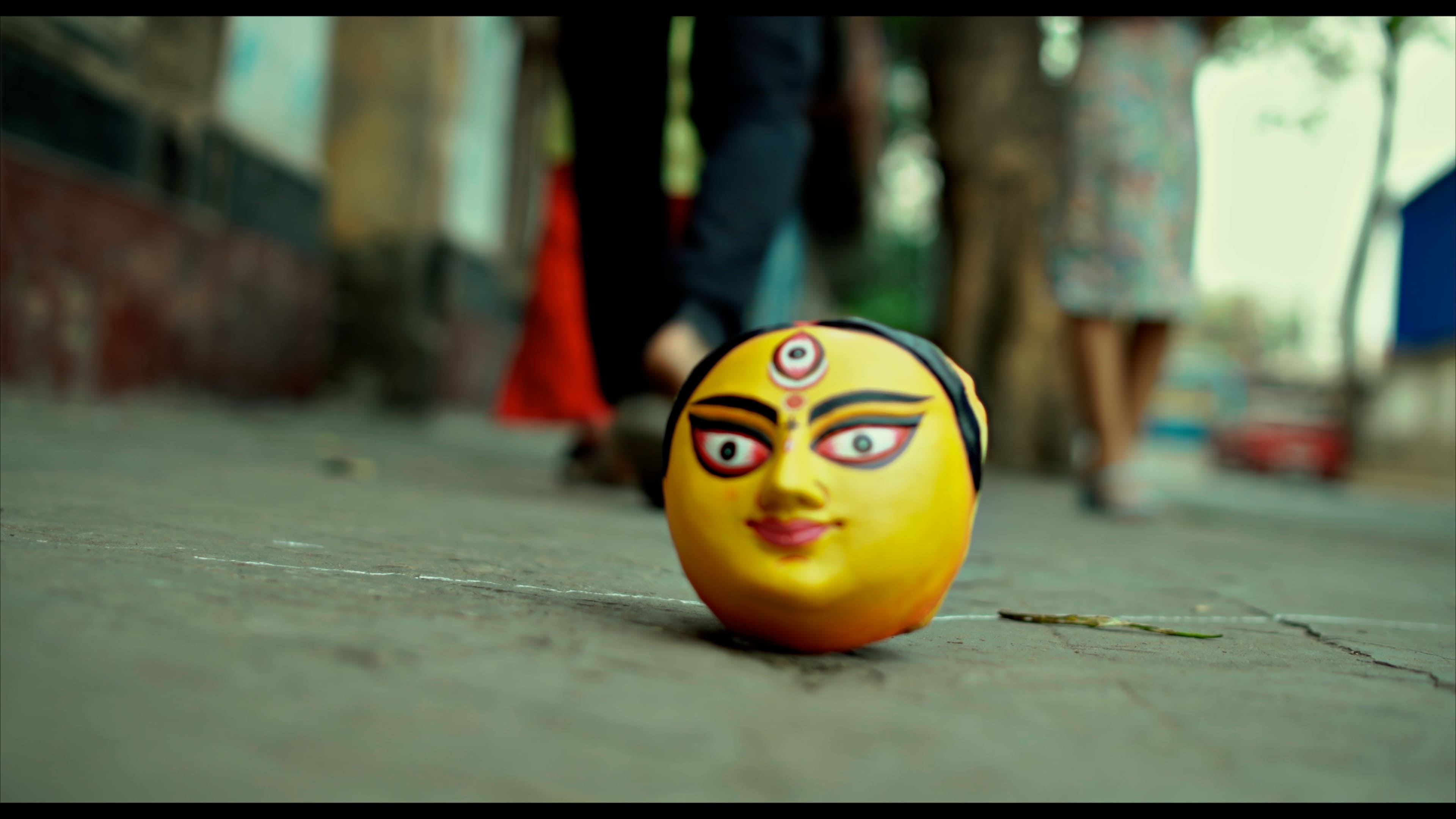
Kolkata-born filmmaker Indrajit Das sits down with Close-Up Culture to discuss his compelling independent short film, LegXpression.
In this interview, he reveals how a moment of intense work anxiety led to an unexpected park bench epiphany, inspiring a unique, faceless visual narrative that challenges the boundaries of traditional storytelling.
Hi Indrajit, welcome to Close-Up Culture. First off, please tell us how you got into filmmaking and what made you fall in love with this craft?
Thank you for having me at Close-Up Culture. I think my interest in film probably started with my family. My father was an engineer, but photography was one of his regular hobbies, and my mother was a great lover of cinema. So, I developed an interest in older films from a very young age.
Later, we had a video camera at home, and as a child I would try to make little films with it. Of course, at that age I didn’t really know what I was doing, but I think the desire to make something was already there. The real turning point came when I was in college and watched Krzysztof Kieślowski’s Camera Buff.
That film affected me very deeply, watching it made me feel that I could make films too. It was almost as if somebody had put a stamp of approval on an idea that had already been somewhere inside me. I think that was the moment when my fascination with cinema started becoming something more serious.
The film opens with a quote from Friedrich Engels. Why did you choose this particular quote, and how much did Engels’ work influence the film?
LegXpression wasn’t written around Engels or his work. The film came from something I had actually witnessed in real life. But when I came home that night and started writing the story, that particular quote from Engels came to my mind very naturally. Somehow, it connected with what I had just witnessed and with the contrast that eventually became the basis of the film.
I wouldn’t say that Engels directly influenced the making of LegXpression. In this case, the experience came first, and the quote followed. It seemed to express something that was already there in the story, which is why I decided to open the film with it.
Telling a story without showing the characters’ faces is an ambitious task. What led you to take on this particular challenge?
It actually didn’t begin as a challenge. It came directly from the way I witnessed the incident that inspired the film. My hometown is Kolkata, India, and I am IT professional. Around ten years ago, one particular day I was under tremendous professional pressure from work and was so tense that I couldn’t stay at home. I went out and walked around the city for an hour or two and I became so exhausted.
After that, I went to a nearby park and lay down on a bench and just opposite to the bench there was two storied building. That building was a popular meeting spot of that area, there were always people coming and going. From that position, I wasn’t really looking at people’s faces. I was watching their legs, the way people arrived, waited, walked around, met one another and left. Gradually I became so absorbed in observing these movements that I almost forgot the anxiety I had been carrying with me. And it was from that position that I witnessed the two contrasting situations that eventually became LegXpression.
When I later wrote the film, showing the characters’ faces somehow didn’t feel right to me. I wanted the audience to experience the story from something close to the perspective from which I had originally seen it.
Why did you choose legs – and particularly the movement of women walking – as the central visual language of the film?
The choice of legs came very naturally from the original experience. As I mentioned, earlier I witnessed the incident that eventually inspired LegXpression. After watching for some time, I began to notice how much you can actually understand simply from the way someone walks, waits, approaches another person or moves away. I was particularly drawn to the movements of the women I was observing that day, because those movements became part of the two very different situations unfolding in front of me.

When I made the film, I didn’t want to recreate the incident from a conventional viewpoint. I wanted to stay faithful to how I had originally experienced it. The legs were not something I chose afterwards as a visual device, they were there from the very beginning, because that was how I had seen the story in the first place.
There is an interesting tension between what the audience sees and what it assumes. How conscious were you of playing with the viewer’s expectations and perceptions?
I wasn’t consciously thinking about the audience’s expectations or trying to control what they would assume while watching the film. I had witnessed a story in real life, and the contrast I saw that day stayed with me for a long time. The two women come from very different socioeconomic backgrounds and live very different lives.
I kept thinking about the woman who was negotiating the price, and I wondered how much pain or struggle she might be going through in her life. I can honestly say that she is one of the who inspired me to tell this story. That was what mattered to me. I simply wanted to portray it as closely as possible to the way I had experienced it. There wasn’t a complicated theory behind it, or a plan to make the viewer think one thing and then surprise them with another.
If the film makes different viewers form different assumptions about the people they are watching, I find that interesting, but that comes from their own perception. I didn’t want to tell the audience what they should think. I wanted to show what I had seen and leave the rest to them.
By withholding the characters’ faces and identities, you make the audience rely heavily on body language and movement. How did you work with the performers to communicate character and emotion through their legs and gestures?
Budget is always a major concern for independent filmmakers, and I had the same limitation with LegXpression. I simply didn’t have the budget to hire professional actors for an experimental short like this, so I worked with non-professional performers. That made the process a little more challenging, particularly because I was asking them to perform in an unusual way. Their faces wouldn’t be doing the work for them, so their movements and gestures became very important. Before the actual shoot, I spent around 15 to 20 days working with them at my home. You could call it a workshop or rehearsal period.
I explained the idea of the film, what I was looking for from them, and we worked on how they would perform within this very specific approach. It took time for them to understand what I wanted, but that preparation was important. By the time we went into the final shoot, they were much more comfortable with the idea and with expressing themselves without relying on conventional facial performance.
The film raises questions about prostitution, labour, perception, and the way we assign meaning to what we see. What were you hoping to explore beneath the surface of the story?
Prostitution and labour are subjects I have thought about personally for many years. When I was very young, I used to pass through a well-known red-light area on my way to school, and somehow that world stayed with me and continued to haunt me through my school and college years.
But with LegXpression, I wasn’t trying to make a scholarly statement about prostitution or explain what people should think about it. I witnessed something, it stayed with me, and I made a film out of it. I’ve put it there for the audience, and what they take from it is entirely up to them. That’s it.

Ultimately, what do you hope viewers question about their own assumptions after watching LegXpression?
I never really thought about what I wanted the audience to question after watching the film. What stayed with me was that woman who was selling her body to survive. Somehow, I felt that she was asking me to tell her story, so I did. Once I had told her story, my part was over. What the audience thinks, what they question, or what they take away from the film is entirely their own. I don’t really want to tell viewers what they should question or what conclusion they should reach. I think once a film is made and put in front of an audience, it no longer belongs entirely to the filmmaker.
And lastly, is LegXpression typical of the kind of work you wish to produce in the future?
No. I don’t want to keep making films only in the style or form of LegXpression. I want to keep exploring different ways of telling stories.
There is, however, one small personal practice that I like to carry from one film to the next. LegXpression contains a shot from my previous film, Fag End: Story of a Smokey Womb. I like the idea of taking one shot or visual element from a film I have made and somehow carrying it into the next one. So perhaps a shot from LegXpression will find its way into the project I am working on now. I don’t know if I would call it a signature, but it creates a small connection between my films.
For more of Indrajit’s work:






Leave a Reply