

By Genevieve Dammery
What if the answer to the climate crisis isn’t getting rid of cows, but learning to live with them differently?
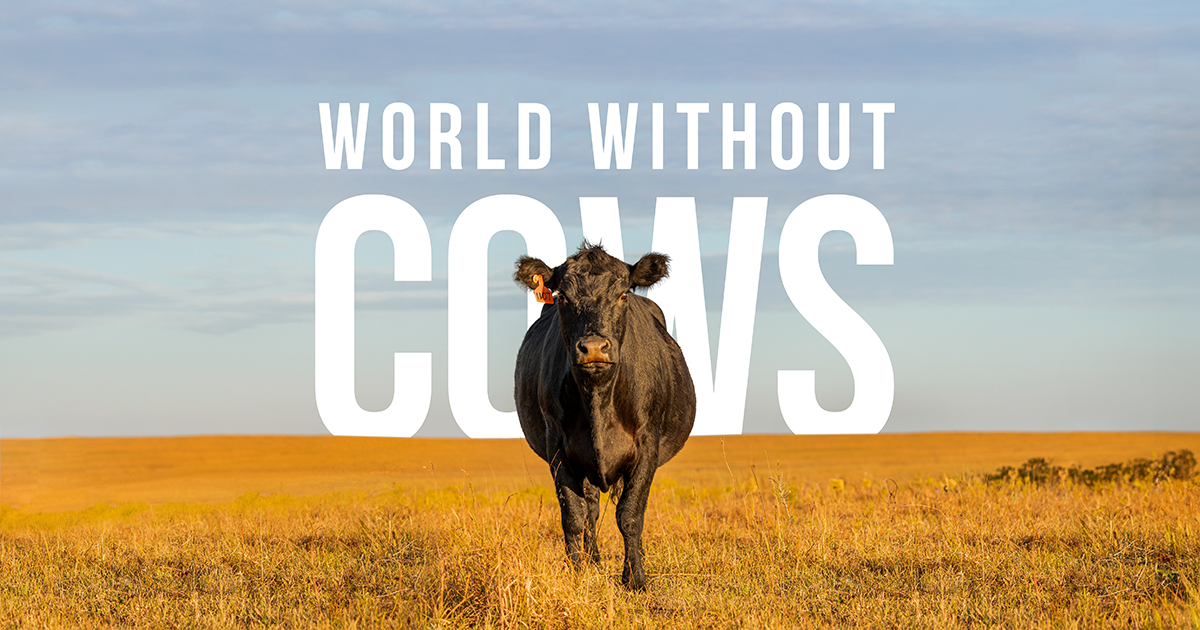
It is the provocative question at the heart of World Without Cows, a new documentary from journalist-filmmakers Michelle Michael and Brandon Whitworth. Filmed over 5 years and across 22 countries, the documentary journeys through cattle-producing communities, scientists, farmers and agricultural experts across the globe. From America to Kenya, India and Brazil, the filmmakers investigate what cows mean not only for the climate, but for food security, rural economies, ecosystems and cultures.
At its core, World Without Cows wants to complicate the conversation around nutrition, food insecurity and climate change. Rather than treating cattle as the environmental villain, it explores their less visible contributions to agricultural systems, including soil health, nutrition and livelihoods. Its most persuasive moments come when it moves away from the language of climate statistics and focuses on the people whose lives and communities are intimately connected to, and often dependent on, livestock.
The documentary’s own framing can feel sometimes simplistic. The central question “Are we better off in a world without cows?” creates a binary that few critics of industrial agriculture actually propose. The more pertinent question is not whether cows should exist, but what kind of cattle farming we should have, at what scale, and at what environmental cost. The distinction matters because the film’s provenance inevitably complicates the discussion. World Without Cows is a Planet of Plenty production, an initiative launched by Alltech, a global animal-nutrition company.
And this is where the film becomes very interesting. World Without Cows is ostensibly a documentary about questioning assumptions, yet it asks viewers to question some assumptions more intensely than others. The exploration of regenerative agriculture and the potential environmental benefit of well managed grazing is highly compelling, but within its 85-minute runtime, it gives less attention to the strongest arguments against intensive animal agriculture, including the environmental consequences of industrial production and the health implications of high levels of red-meat consumption.
The journey spans multiple continents and attempts to demonstrate that cattle mean very different things in different societies, yet the American agricultural perspective remains prominent. At times, the film feels interested not with questioning whether the cattle industry needs to fundamentally change but rather demonstrating why it deserves to survive.
That doesn’t make everything it says wrong; quite the opposite. One of the documentary’s most valuable contributions is its insistence that agriculture cannot be reduced to a single metric. Cows can simultaneously contribute to greenhouse-gas emissions while supporting livelihoods, providing nutrition and playing ecological roles. Climate policy, food systems and agricultural economics rarely fit neatly into the categories of good and bad, and this is central to the conversation that the film is creating.
Ultimately, World Without Cows is an extremely successful and important conversation starter, but it does not provide all the answers. In a debate where nuance can easily be lost, World Without Cows makes a case for looking beyond the headline figures and considering the bigger picture.
Whether or not it changes your mind about cattle, the documentary leaves you with something valuable: a reminder that some of the biggest environmental questions rarely have simple answers. Maybe a better future isn’t about imagining a world without cows, but about imagining a food system in which both people and the planet can thrive.






Leave a Reply