
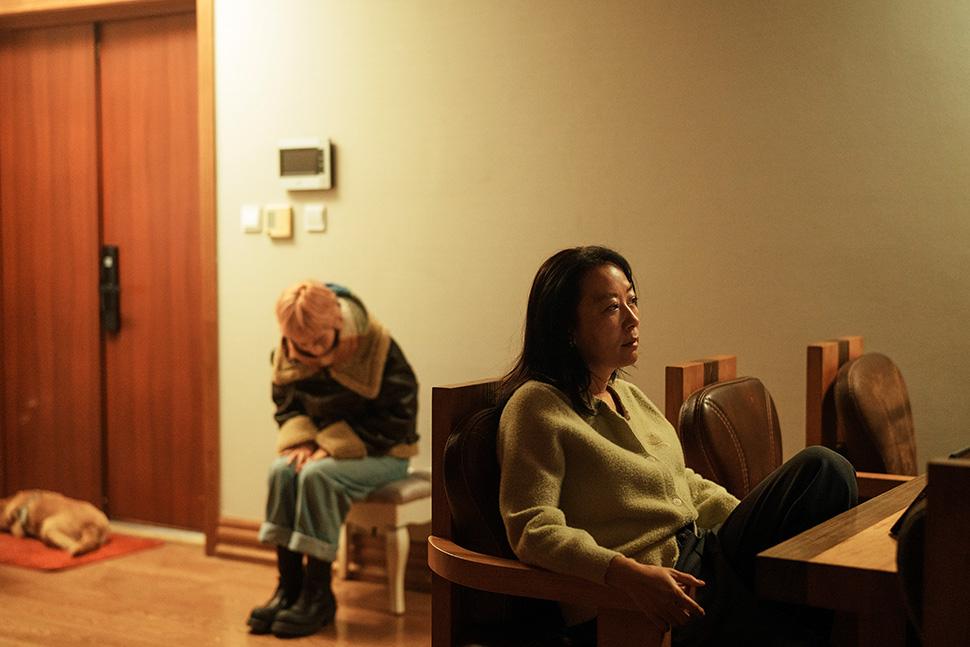
Fresh from its premiere at the 2026 Venice Film Festival, director Michelle Zhou’s feature Big Little Things (Huangyan shenghuo) breathes emotional weight into a familiar premise.
The film follows Lei (played by Cuishan Liang), a woman returning home to Harbin for Lunar New Year after living in the United States. Trapped between her authentic life with her girlfriend, Li Bei (Jialing Sun), and the heavy burden of filial duty, Lei hires a man to pose as her boyfriend. While it sounds like the setup for a traditional romantic comedy, Zhou bypasses the usual genre tropes. Instead, she grounds the story in a contemporary Chinese setting where generational expectations to marry and have children carry uncomfortable cultural gravity.
Lei is acutely aware that her façade satisfies no one. She even admits to a colleague in an early scene of the film that the truth always surfaces, yet she remains paralyzed by an agonising reluctance to disappoint her family. Her lies do not stem from malice; they are born from a desperate mix of love and fear. Zhou highlights the futility of this deception during a poignant encounter with a local tattoo artist – the very man she has hired to be her temporary partner – who reminds Lei that some things are simply impossible to hide from parents.
The subsequent family scenes hum with an awkward, universal familiarity. Lei’s mother immediately criticises her short pink hair, while relatives relentlessly cross-examine her hired partner at the dinner table. Through the parents’ constant, weary bickering, Zhou subtly illustrates how easily generational trauma and rigid expectations transform into permanent family patterns. Her mother’s attempts to learn English offer a brief reprieve, while hinting at the unfulfilled dreams the older woman might have once harboured for herself, or perhaps a desire to connect on a deeper level with her daughter.
Zhou’s restrained visual palette gives these domestic conflicts a brilliant, cinematic weight. Working with muted colours and a sparse, piano-led score, she frames Lei as a lonely outsider in her own hometown. Lei is repeatedly shown gazing through the glass windows of moving buses and cars, watching a world she longs to join but cannot quite reach. This recurring motif beautifully captures her state of emotional suspension -physically moving through her spaces while remaining entirely detached.
The narrative stakes escalate sharply when Li Bei unexpectedly arrives in Harbin to meet the family. For a brief moment, the film opens up, allowing the couple to share genuine glimpses of freedom and happiness. However, Zhou is quick to pull the curtain back down. The director uses hard cuts back to Lei’s mounting isolation, perfectly capturing the emotional whiplash of trying to exist simultaneously in two incompatible worlds.
Big Little Things may not reinvent the “fake relationship” narrative, but it succeeds entirely on the intimacy of its observation. Zhou delivers a deeply authentic portrait of the quiet betrayals, evasions, and small humiliations that accumulate when trying not to disappoint your family, even at the expense of losing yourself.




Leave a Reply