
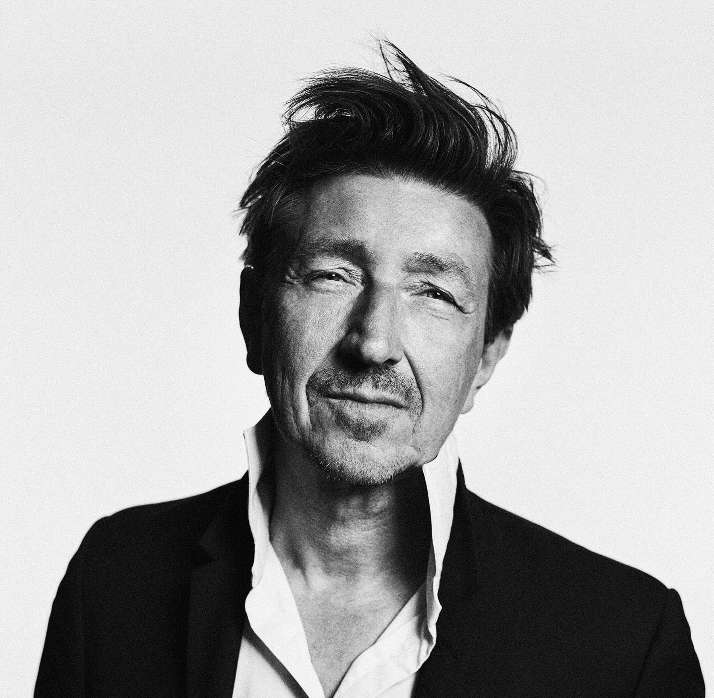
Actor and director Nicolaj Kopernikus joins us on Close-Up Culture to talk about his acclaimed short film, From Above.
For those who have yet to see the film, explain the plot of FROM ABOVE.
In FROM ABOVE, Morten reconnects with his daughter for the first time in eight years. After their emotional encounter, he embarks on an unconventional and dramatic journey to win back her attention and forgiveness, using extraordinary methods to bridge the gap between them.
Where did you get the idea for the story?
The idea for the story came from a homeless man I often saw standing outside a supermarket near my home. He would drink beer there every day, and I began to wonder: What’s his story? Why is he out there, day after day? What if he had a family, perhaps a daughter or son, whom he had lost contact with? That sparked the idea for a story about seeing life from a different perspective—one that might appear very different when viewed from above.
You both star and direct in the film. What is it like to direct yourself?
Surprisingly, it wasn’t too difficult. I was very clear about the direction I wanted to take with the character and the story. Of course, there were moments when I had to review the footage on the monitor, but for the most part, I felt confident in the process. The reason I played the lead role myself was simply because I needed an actor who wouldn’t mind shaving off all his hair and beard—something I was comfortable doing!

How did you go about casting for the project?
Having been an actor in Denmark for over 30 years, I’m fortunate to know many talented actors, so casting wasn’t a huge challenge. One interesting casting detail: the actor who plays the father who confronts Morten about scaring children actually brought his own child to the shoot. It helped them both feel more secure during the scene.
What was the biggest challenge in making this film?
The biggest challenge was definitely shaving off all my hair for the role. There was only one shot where I needed to be clean-shaven, so we had to prepare it carefully. Another big challenge was creating the large art piece made of plastic. We had no idea if it would work the way we envisioned, but it was crucial to the story.
What led Morten to become homeless is not fully explained. How did you decide on the amount of backstory to give him?
In short films, you don’t have much time to delve into backstory, so I chose to leave Morten’s past somewhat open-ended. What’s important is that he’s a special person capable of doing extraordinary things. His descent into homelessness is almost a consequence of life’s unpredictable turns—a divorce, a lost job, severed friendships—and suddenly, everything can unravel. I wanted to show how fragile life can be and how easily one can lose everything.
You go through a physical transformation in the film. Was any of that yourself or does most of the credit go to the make-up and hair department?
The transformation was a mix of both. I had long hair and a beard, which was enhanced with additional hair by the makeup team. When it came time to cut my hair for the role, that was all done on camera, with my own hair.

How does your experiences as an actor influence your directing style?
After 30 years as an actor, I have a strong intuition for character development and actor interaction. When I direct, I focus a lot of energy on the acting. I want the characters to feel authentic and grounded. I’m fortunate to have a talented director of photography who helps me tell the story visually, but the core of my direction revolves around the performances.
Do you have a dream actor/actress that you would like to work with in the future?
There are so many incredibly talented actors out there, it’s impossible to pick just one!
If not a secret, what will you be working on next?
Right now, I’m shooting a large film as an actor, and I’ll be working on another project in March 2025. Additionally, I’m writing a feature film that I hope to direct by the end of 2025 or in the spring of 2026. It’s about a man who begins to spiral into mental illness, and the central question is: Is he mad, or is he a genius?






Leave a Reply