
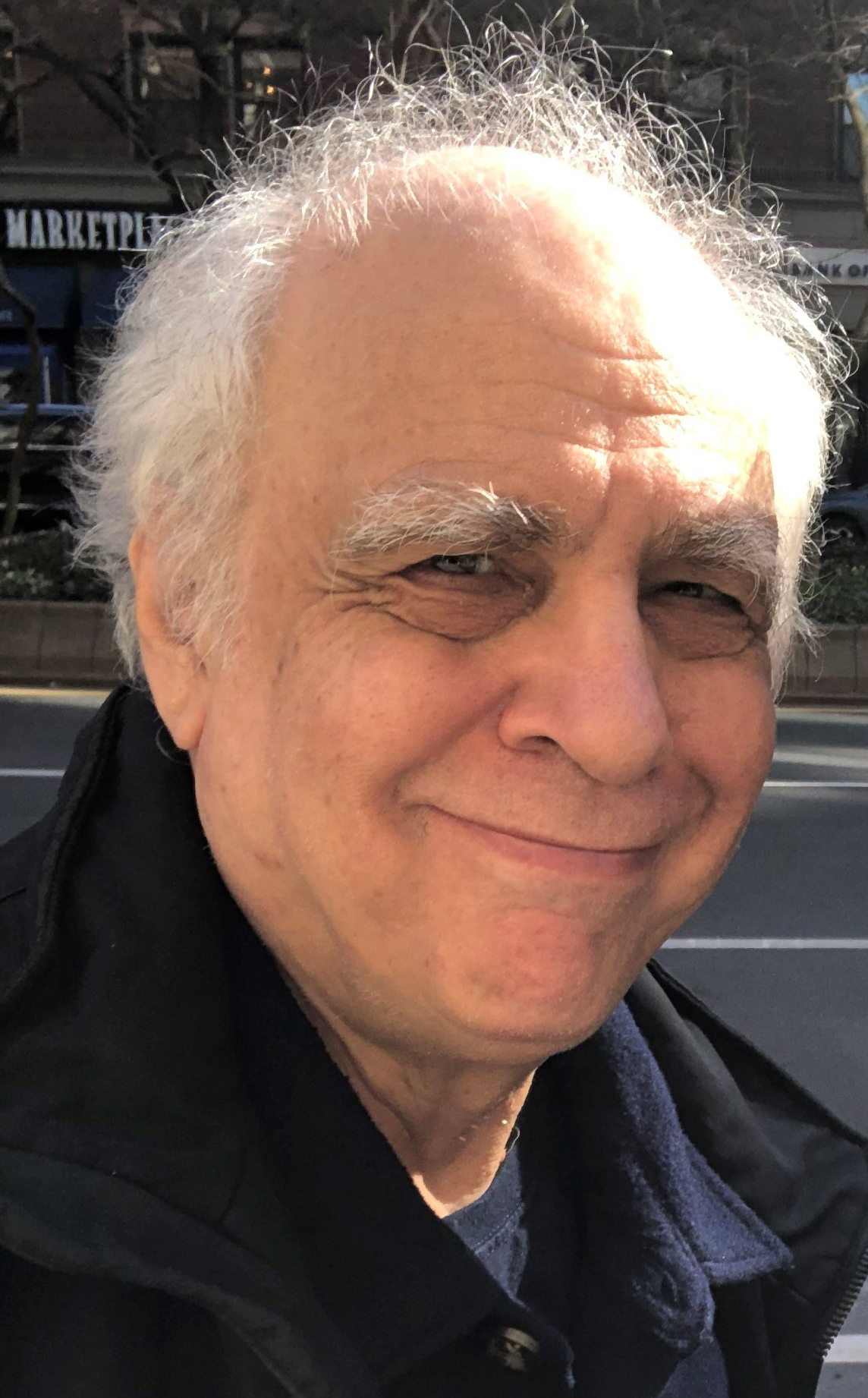
Playwright Jeffrey Sweet joins us on Close-Up Culture to tell us about his play Kunstler, which comes to The White Bear Theatre in May.
Hi Jeffrey, lovely to be speaking with you! Starting with the broadest question, what inspired you to write Kunstler?
I was aware of William Kunstler when I was a kid in the Sixties. In fact, I met him briefly in Atlanta, though, at the time, I was so exhausted from a day’s work I could barely say hello. I’ve always been interested in legal and political drama. (In high school, I played the Clarence Darrow character in Inherit the Wind.) One of my most-produced plays in the States is based on an obscure proceeding I unearthed from 1945, Court-Martial at Fort Devens, an action taken against some young Black women in the Army when they got into a fight with a racist colonel. (Surprise twist: they actually beat him!)
There were two specific catalysts. Sarah and Emily Kunstler made a film about their father called Disturbing the Universe that excited my interest in him again. And I am friends with Jeff McCarthy (best-known for starring in the original Broadway productions of Urinetown and Side Show). As I watched the film I thought, “That looks like Jeff on a bad day.” I asked him to watch the film. He called me up and said, “I could play this guy.” He committed to being available for the development of the script, and that was enough for me to get started. Plus, I figured out the arc of the story, which (I’m told) had eluded someone else who had tried to do a play about Kunstler.
How long did the writing process for this performance take? Did you make any major edits between the writing and directing stages?
The researching and writing of the play took about a year. Jeff and I put together a reading for a non-profit theatre, which instantly scheduled it for production. There was still work to do after that, though. I always had a hunch that a friend of mine named Meagen Fay (a brilliant comic actor from Chicago’s Second City and countless films and TV shows) would make a good director. It turned out, by complete coincidence, she actually knew Kunstler So well that she called him Uncle Bill. (One of her biological uncles was a priest who taught law in Chicago and he and Kunstler were friends and consulted.) In fact, Jerry Rubin and Abbie Hoffman crashed in her family’s house a few times during the trial of the Chicago Seven. So, by pure happenstance, I had chosen a director who was in a special position to bring the play the rest of the way home.
In the original draft, the second character, Kerry, started in the audience and was brought up onstage by Kunstler as an unwilling foil. During development, it occurred to me I could do more if she were on the committee that had invited him and she’s stuck introducing him (especially uncomfortable because she has mixed feelings about him). Meagen had terrific ideas about animating the relationship between the two of them. Kerry is a fictional character, though she represents some of the law students I met who were ambivalent about Kunstler’s tactics. For the play to work, she had to be a full and constant presence, a worthy antagonist. Meagen had the stagecraft to strengthen that.

Who are your biggest influences in the arts world?
I had an early love for musicals, but the specific early influences were from the world of comedy: the team of Mike Nichols and Elaine May, and the four guys – Alan Bennett, Peter Cook, Jonathan Miller and Dudley Moore – who created and performed in Beyond the Fringe. Aside from the fact that these people are/were all funny, they made theatre without resorting to a lot of technical enhancement. Beyond the Fringe’s sketch about WWII, “The Aftermyth of War,” taught me how swiftly you could move from one scene to another and that it was possible to do an epic with a quartet of players and some chairs.
As it happens, in my work as a journalist, I interviewed Nichols, Cook, Miller and Moore and met May and Bennett. In fact, the last time I saw Mike Nichols, he came to see Kunstler in New York and wrote me a complimentary letter that was like getting a good word from God. He knew he was one of the reasons I went into the business and was kind enough to say that it made him happy. Of course, there are playwrights – aside from the usual (Shakespeare, Chekhov, Williams) — Lanford Wilson, Sidney Kingsley, Lorraine Hansberry, Jules Feiffer, Sondheim and Caryl Churchill are particular favorites.
This was originally performed in New York, what led to the decision for you to take this across the pond?
I have been following theatre in London for as long as I’ve been going to the theatre. I’ve seen a lot in London and I’ve seen most of the major imports to New York from about 1967 on. I had three previous brushes with the community. Anthony Page hired me to work with him on the TV movie version of Pack of Lies (he and Hugh Whitmore had had a falling out) which gave me the great pleasure of working with Alan Bates. A musical I co-wrote, What About Luv? (based on a comedy by Murray Schisgal), played the Orange Tree Theatre and had a brief run at the Lyric Hammersmith, And Warren Mitchell took a shine to a play of mine about the blacklist called The Value of Names and we tried for a bit to find someone to produce it with him. American theatre tends to be autobiographical, and my sense is UK playwrights more often than not find inspiration outside of their immediate circumstances. I’ve always felt my plays tended toward the later model. So a visit to London seemed right. (I’ve also noticed that UK playwrights have often written about American political figures, so I thought this might find a welcoming audience.)
What is one of the best reactions you have received from the performance?
Though the play doesn’t avoid some of the things that infuriated many about Kunstler, the fact that Sarah, Emily and Karin Kunstler all have embraced this portrait of their father enthusiastically is very satisfying. Karin saw the play four or five times. Jeff McCarthy said to her, “Five times, Karin? What’s that about?” And she said, “I miss my father.” Hard to beat that.

What was it like to work with this cast and crew? Is it the same people from the New York performance coming to London?
I wrote the play for Jeff McCarthy and he is doing it, I asked Meagen Fay to direct and she’s directing, and this is going to be the fourth time the show is a collaboration between producers I’ve worked with on other projects, The Creative Place International and AND Theatre Company. (Hint-of-Lime joins us as co-producers to help us navigate the unfamiliar waters of London, and they’ve been great.) The same crew has been a part of the project for years. Nykila Norman, who joined the project last year as Kerry, is someone Meagen discovered and I am delighted by her fresh take. Writers rarely have as determining a hand in production as I’ve been allowed on this one and I am very aware of my good luck.
If you could describe the play in 3 words, what words would you choose?
Fierce, funny and swift. Modest, hunh?
Where can people see updates in your work?
Whenever I publish anything new, it shows up on Amazon. (My most recent book is an update of Something Wonderful Right Away, my oral history of Second City.) And I post pretty regularly under my name on Facebook. Also, I have a blog called “Jeffrey Sweet: Making the Scene” at https://jeffreysweet.blog.
And finally, if you could work with any playwright, alive or dead, who would you want to work with?
For years I dreamed of writing a book for Stephen Sondheim, but, though we were friendly, I never summoned the nerve to approach him with the project I thought could have worked nicely, the tragic story of one of the inventors of radio. He was one of the best teachers I’ve ever encountered, and, when he was in a good mood, one of the most stimulating conversationalists. Pretty much everyone I know in the American theatre community misses him like crazy.






Leave a Reply